Dick Bengtsson
Dick Bengtsson
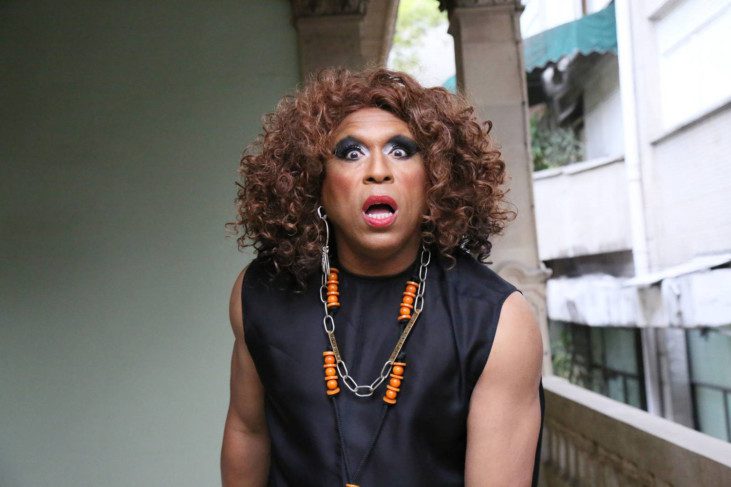
Richard in Paris, 1970
© Dick Bengtsson/BUS 2012
Dick Bengtsson’s (1936–89) art is multi-faceted and invites discussion and interpretation. It delivers no unequivocal messages, no simple answers. On the contrary, he is drawn to the zones where ideologies are revealed. The mighty institutions of the West – the Church, Politics, the Nation and Modern Art – are put under scrutiny.The paintings are often given thick coats of varnish to look as if they had been unearthed after centuries of being hidden away, or like remnants of a distant past. It is as if the artist wanted to draw the attention to the flaws of the modern project and the dark ideological underbelly of our rational society.
In Bengtsson’s imagery, highly-charged symbols appear in unexpected contexts, generating uncertainty about their usual meaning or interpretation. Bengtsson’s paintings cause subtle clashes between functionalism and fascism, between the idyll of red summer cabins and his own time, shaken by the revolts of 1968 and 1970s terrorism.
Dick Bengtsson indicates at how time and context inform the way we look at art, and how symbols can effectively change our perspective. Before the Nazi atrocities, the swastika was merely an ancient religious sun symbol without political implications, but today it is one of our most charged symbols. Bengtsson was obviously not a Nazi. He simply demonstrated that colour and form are always significant, and he never avoided the disturbing or the complex.
Over the years, many artists have been inspired by Bengtsson’s works, such as Neo Rauch, Cecilia Edefalk, Karin Mamma Andersson and Ernst Billgren.
Why did Dick Bengtsson paint swastikas?