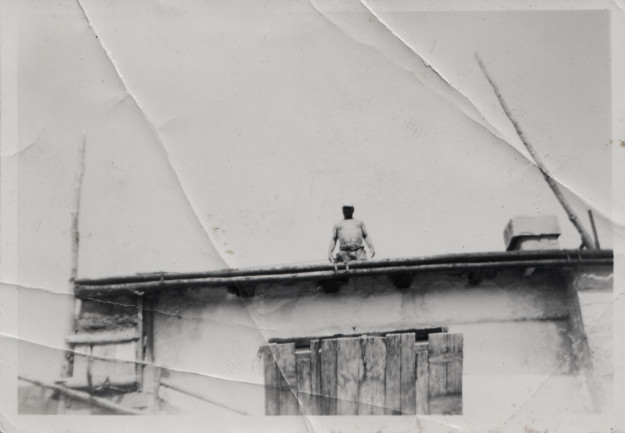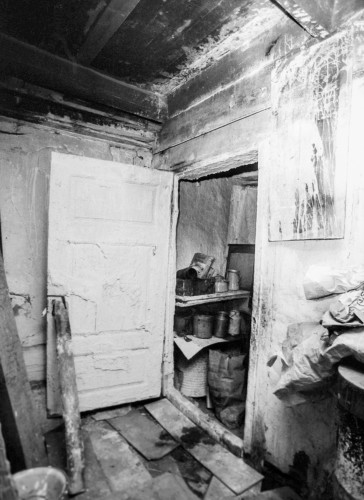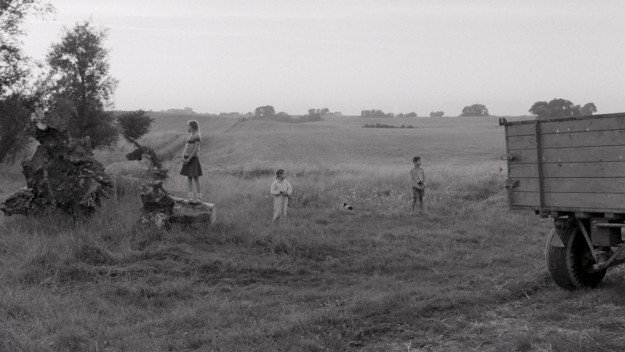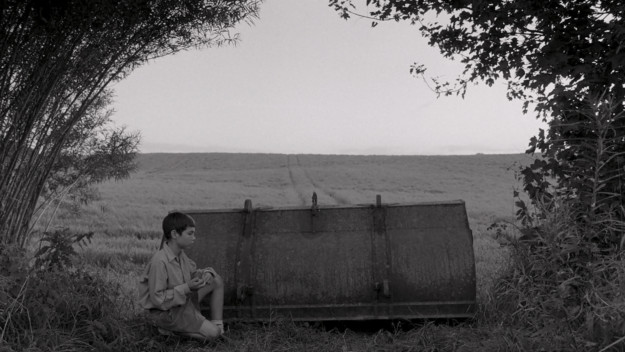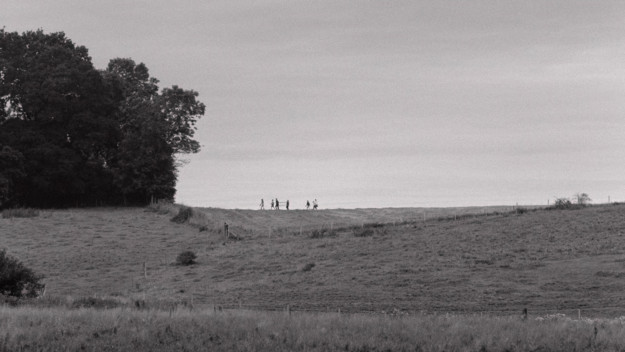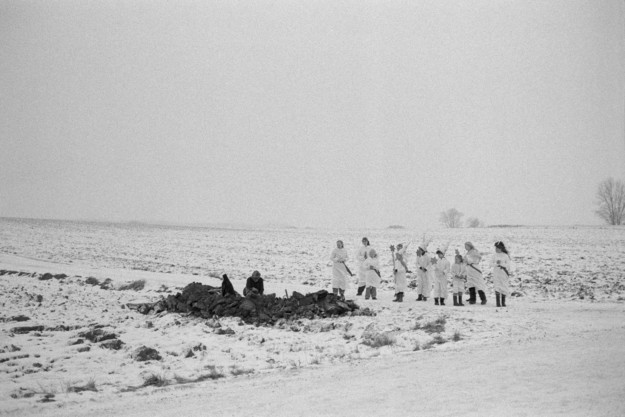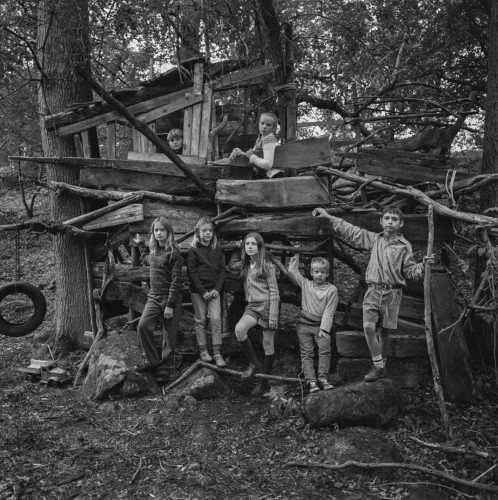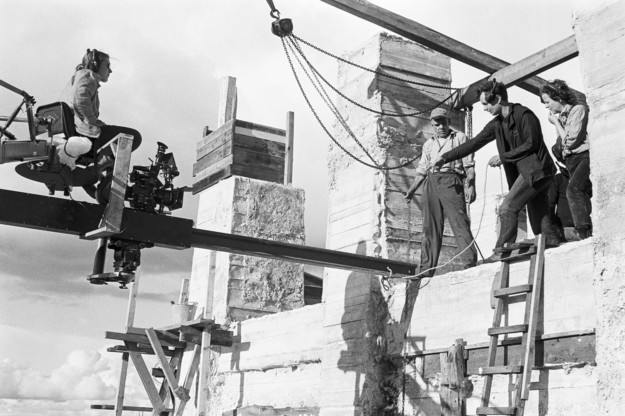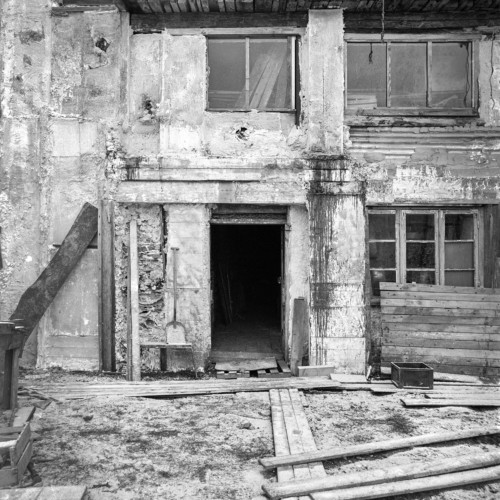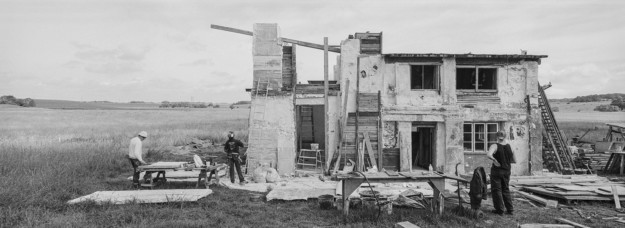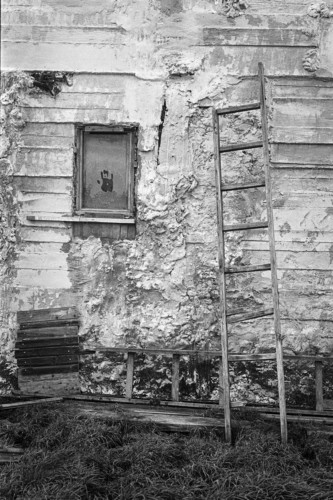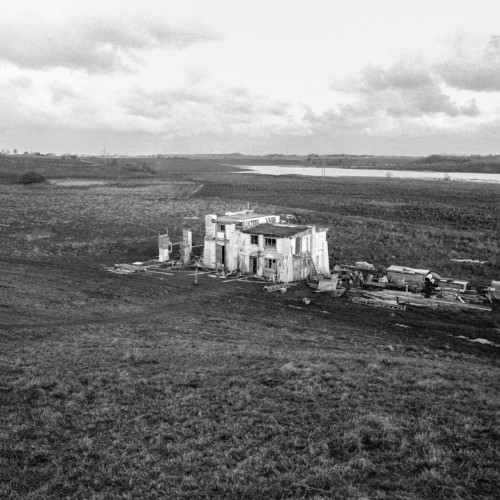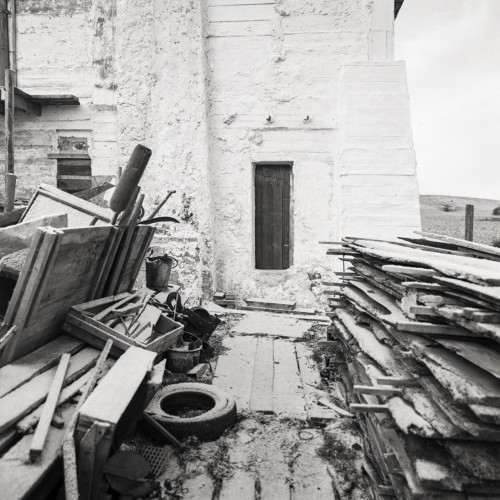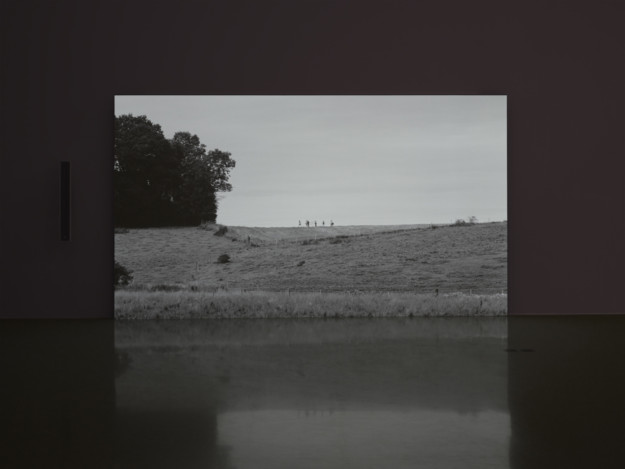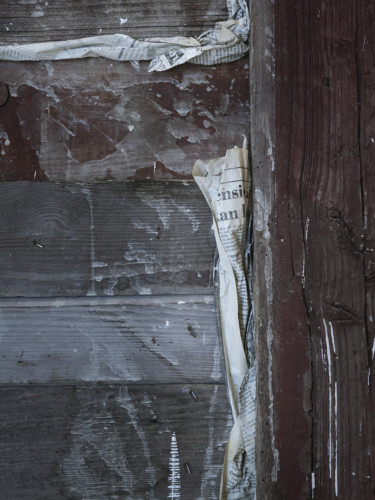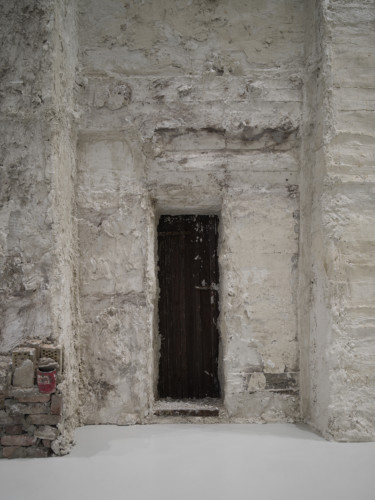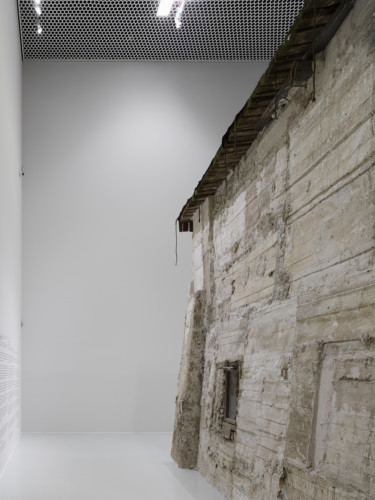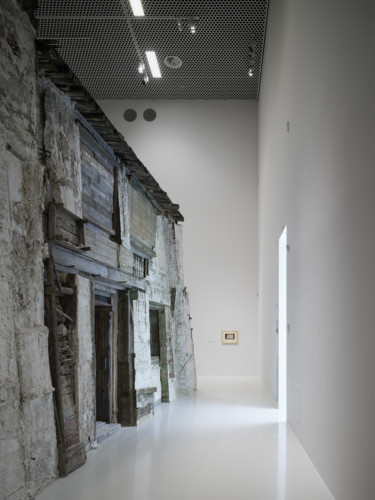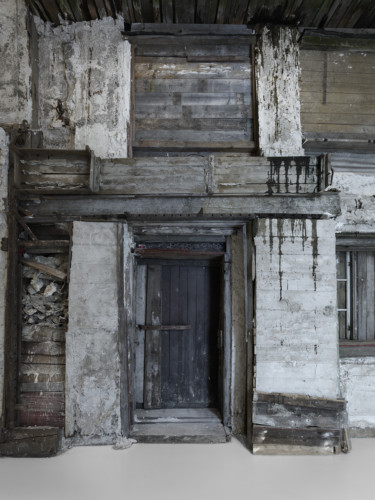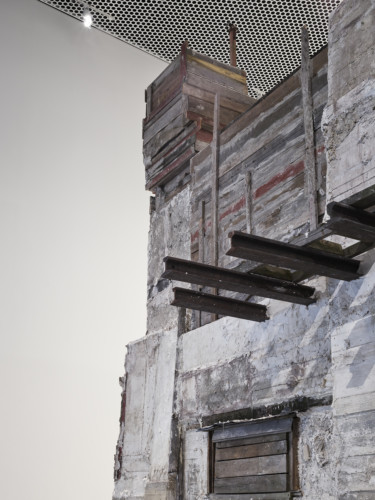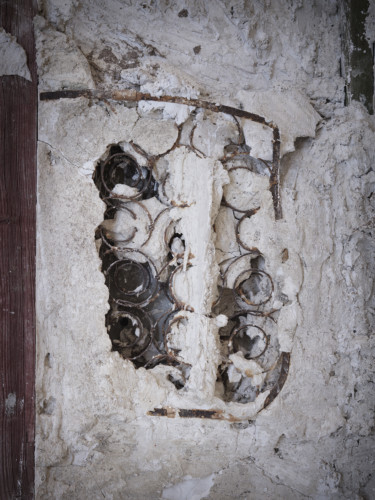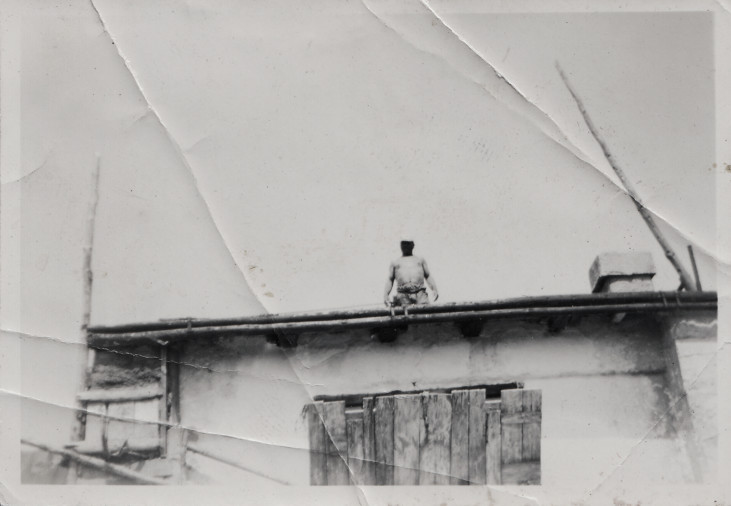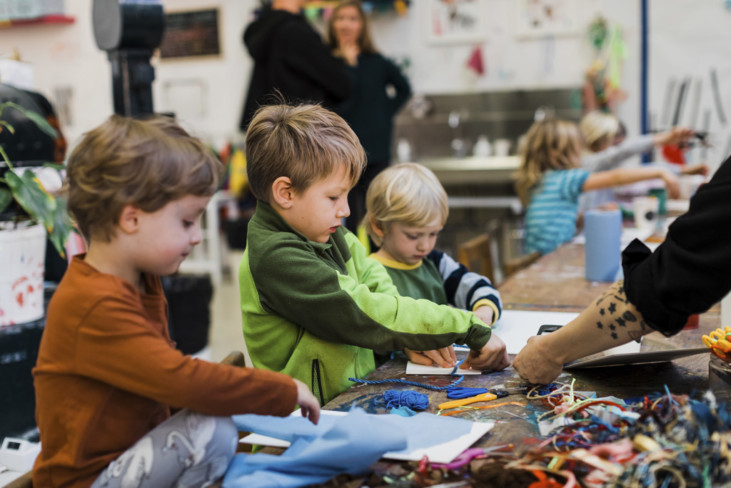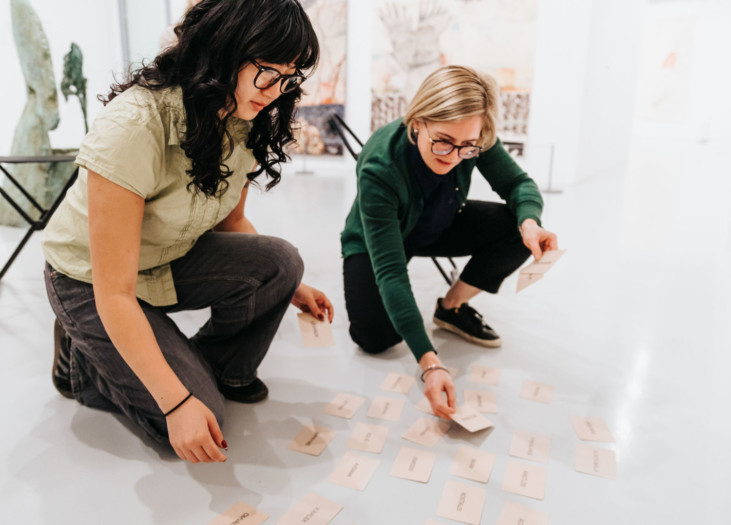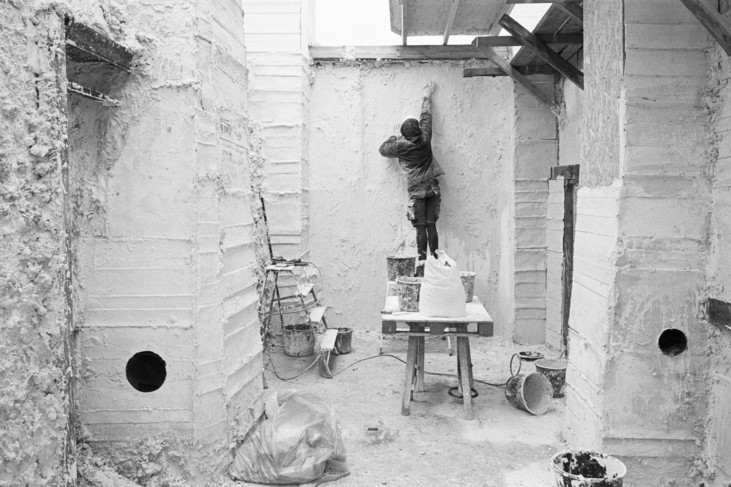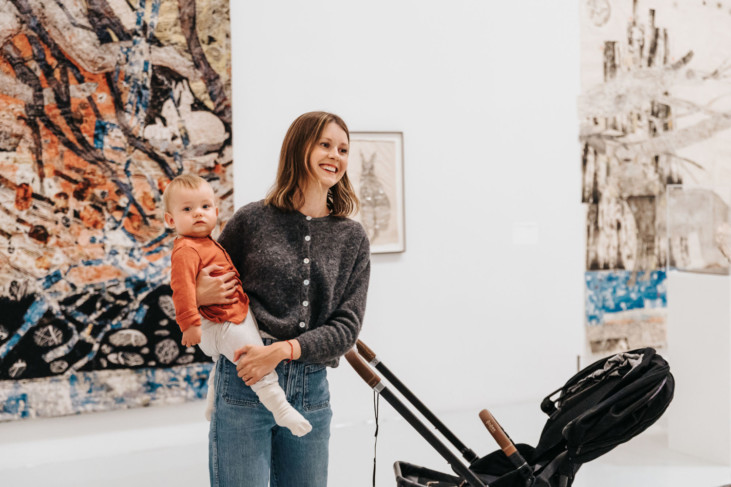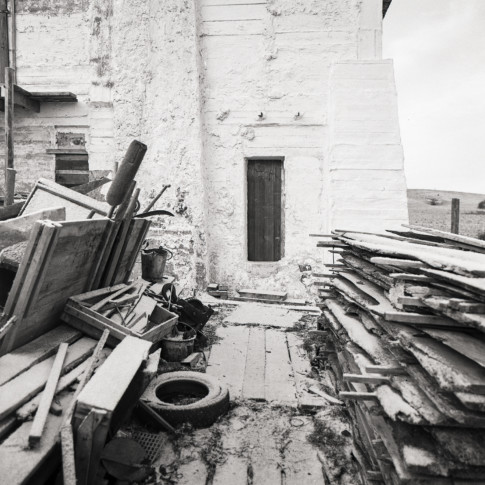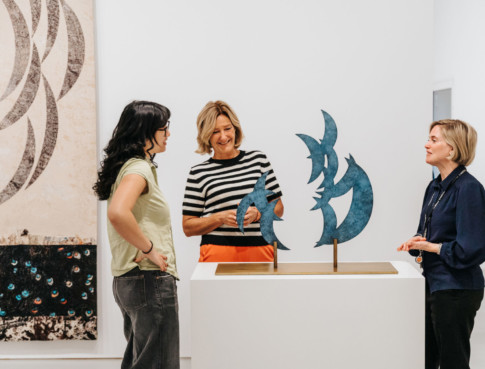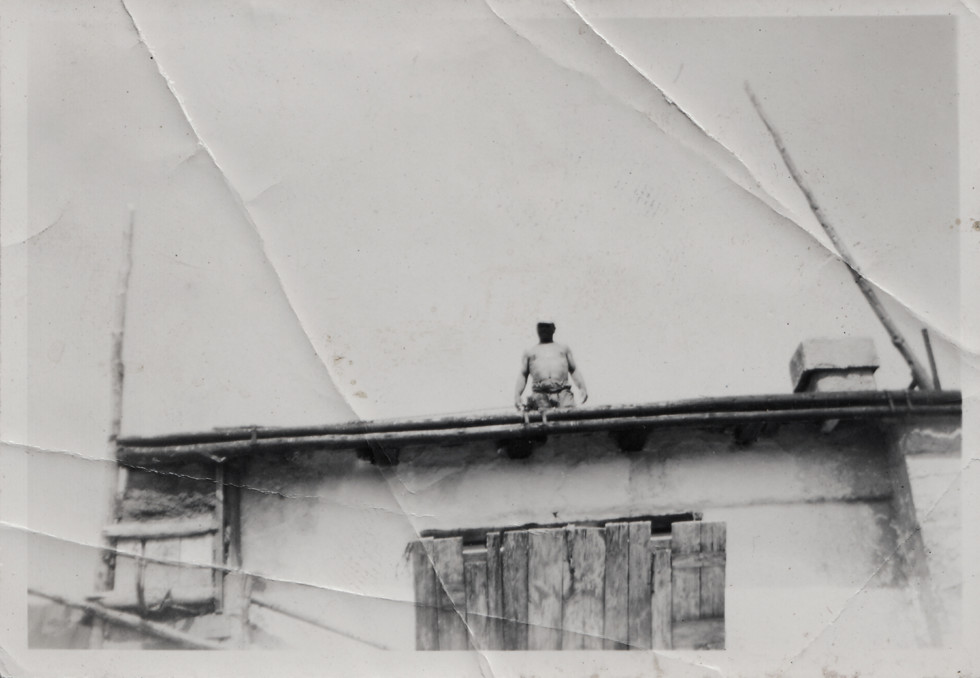
John Skoog, REDOUBT, 2026 Photo of Karl-Göran Persson in his building 1981 found by John Skoog's mother, 2013
Redoubt
John Skoog in collaboration with Laslo Chenchanna, Julian Ernst, Gabriel Karlsson, Erlend Rødsten, Søren Schwarzberg, Ernst Skoog
14.2 – 17.5 2026
Malmö
Armoured bunker or a simple hut? A protective redoubt for a Scanian village – or a brutalist sculpture? In “REDOUBT”, visitors move through the borderlands of twilight: between fantasy and reality, between play and gravity. Here are austerity and petrified paranoia – but also the deepest care.
It was in the Scanian plains, near Hörby, that agricultural worker Karl-Göran Persson (1894 –1975) transformed his home into an armoured fortress: protection against a war he feared, a war that never came. He poured fear into concrete, and loneliness became masonry in a structure that still rises over the fields – a secretive embodiment of collective unease.
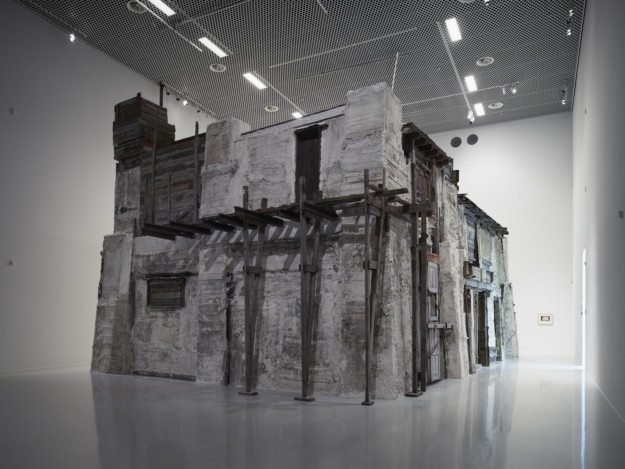
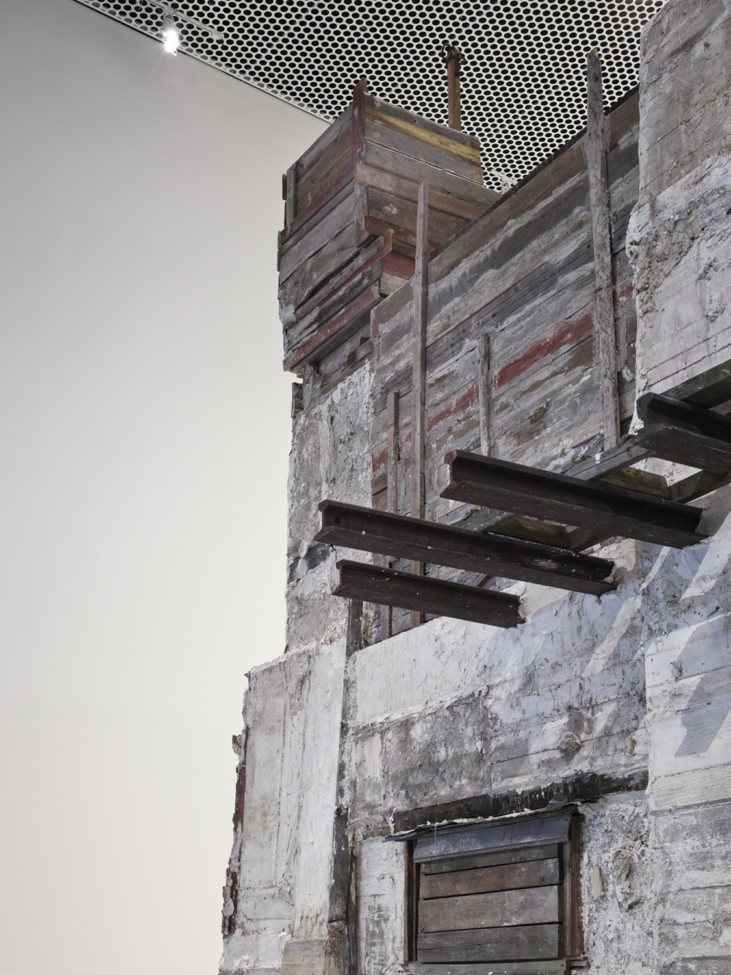
It is a serious, ominous exhibition, but also spectacular. Right inside the door, one is confronted by the large two-story structure, with wood and scrap protruding from the concrete façade. It smells slightly – perhaps of dampness and tar. /Christine Antaya, Sydsvenskan
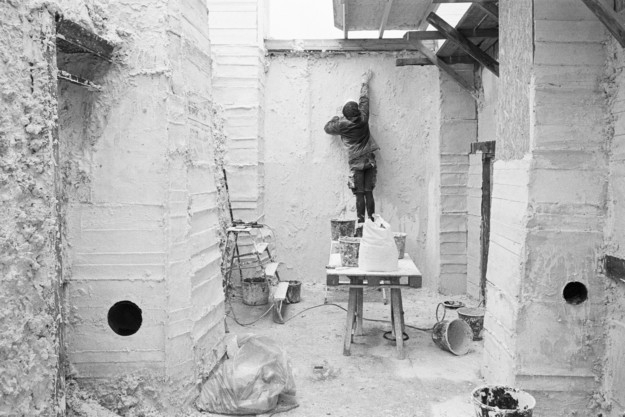
“REDOUBT” marks the culmination of a twelve-year artistic project in Karl-Göran Persson’s footsteps. When John Skoog and his collaborators, ahead of filming, built a reconstruction of Persson’s structure, the work evolved into a shared artistic exploration. The result – a monumental sculpture – is now shown for the first time.
Karl-Göran Persson belonged to the community while simultaneously standing beside it. In the space between adults’ everyday labour and children’s den-building and war games, he began the lifelong transformation of his home in the 1930s. After the civil defence pamphlet “If War Comes” (“Om kriget kommer”) was first distributed to Swedish households in 1943, the project gained new momentum and continued through the superpower tensions of the Cold War.
As a visitor to the Swallow’s Nest, it is not possible to enter the structure, only to move around it in circles. It takes on a new sculptural status, becoming a monumental fetish charged with a particular presence, while also allowing room for reflection and new narratives about its meaning. /Fredrik Svensk, Aftonbladet
The structure was intended to offer protection to every resident of the village – and even to the King. Over decades, Persson collected metal and scrap from an agricultural sector undergoing rapid transformation – materials he hauled home on his bike and cast into the concrete as reinforcement. Farm tools, bicycle parts, and milk churns were embedded in the walls, surfacing like fossils from an earlier society. They bear witness to modernity’s shifts in Swedish agriculture and to a changing relationship between humans, machines, animals, and landscape.
Karl-Göran Persson’s stubborn care was sustained by a rationality also attentive to something more fragile, more untamed. Was his undertaking excessive? Naive? Irrational? Perhaps. But what, then, is a reasonable response to the possibility of war – and what is war, if not the collapse of human solidarity and reason?
Certainly, REDOUBT possesses a quiet dignity – indeed, even a gentle beauty – that can be experienced as a form of resistance in a world dominated by brutal demands and coarse emotional expressions. /Frans Josef Petersson, Kunstkritikk
About John Skoog
John Skoog (born 1985 in Kvidinge, Scania) is an artist and filmmaker based in Copenhagen. After studying at Städelschule in Frankfurt, graduating in 2012, he has worked with film, video, photography, and installation. His practice often returns to the landscape where he grew up – its people, machines, animals, and natural terrain. In his films, dusk and twilight recur as thresholds, carrying a sense of quiet unease. Skoog’s work combines historical research and close observation of everyday life with a poetic sensibility. His process is defined by long-term collaborations with people both in front of and behind the camera. Alongside his artistic practice, he runs the nomadic cinema Terrassen in Copenhagen and is Professor of Film at the Academy of Fine Arts Mainz. John Skoog is represented in Moderna Museet’s collection with: “Late on Earth” (2011) and “Shadowland” (2015).
The feature film “REDOUBT” premieres in Swedish cinemas on 27 February 2026. It is produced by Plattform Produktion and distributed by TriArt Film.
Curator: Joa Ljungberg
With support from Danish Arts Foundation (DK), Fake Foundation (DK) and OCA – Office for Contemporary Art Norway (N).
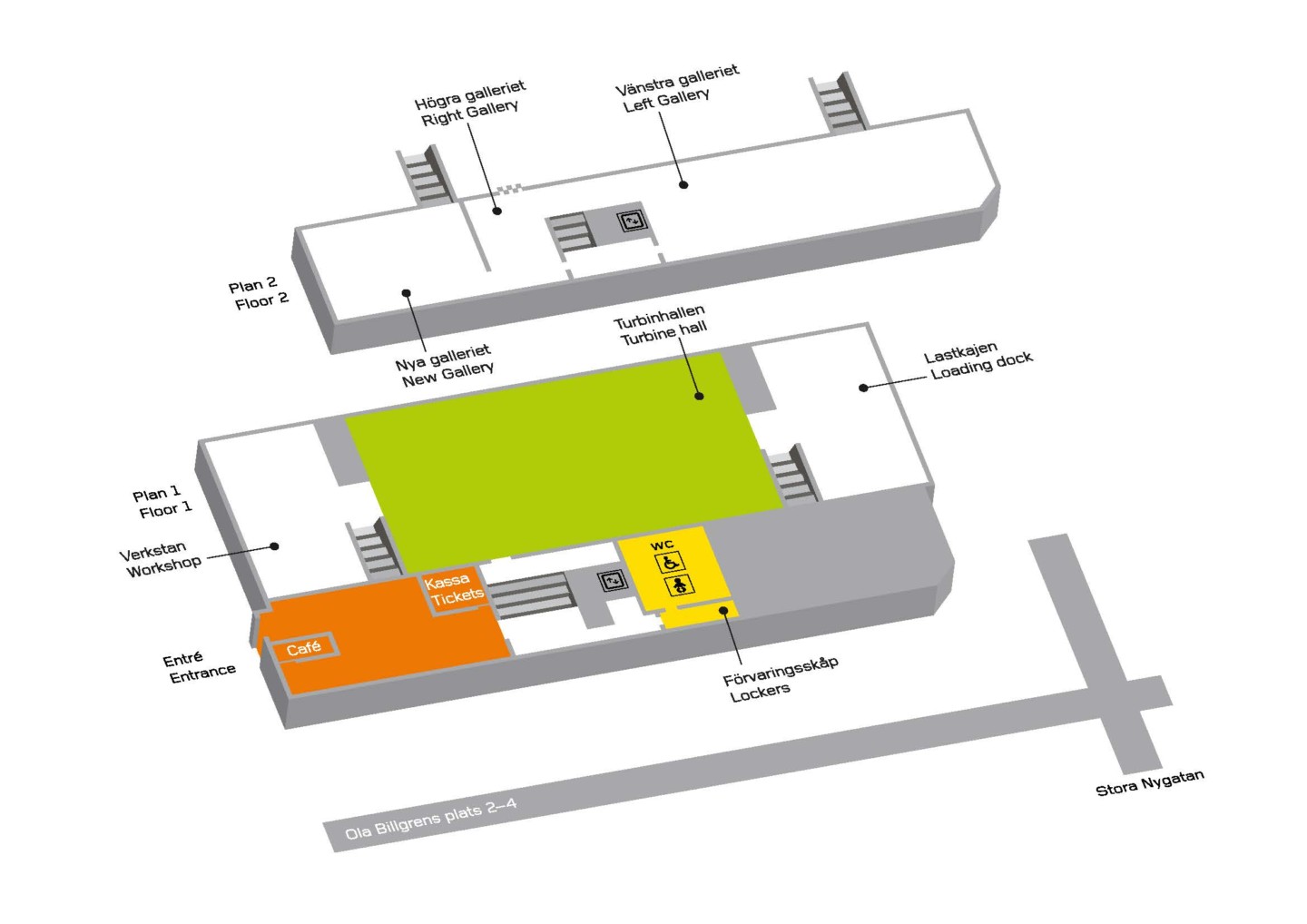
The exhibition is shown in the Turbine Hall