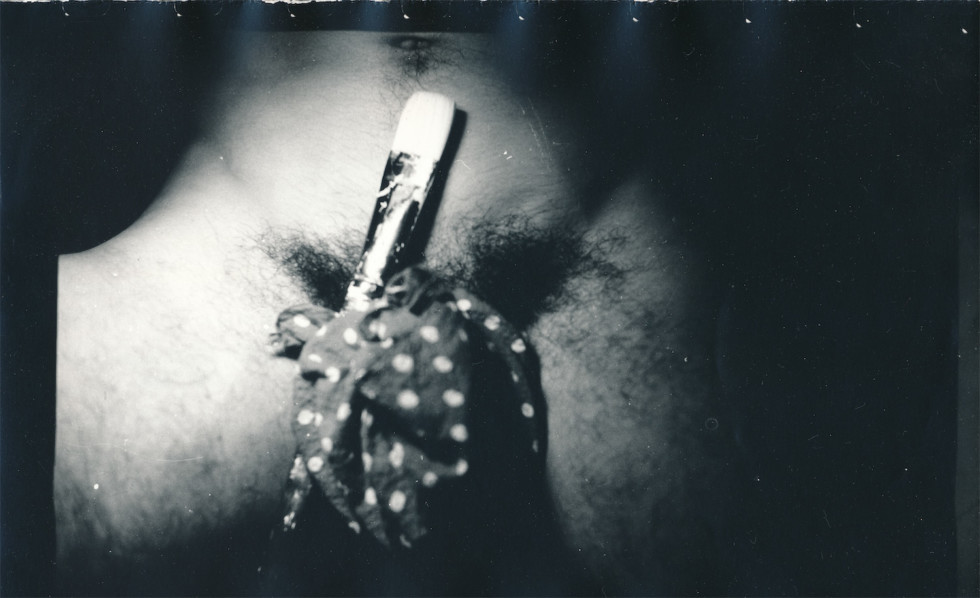
Károly Hopp-Halász, Bundle and Brush, 1979 Courtesy of acb Gallery and Franco Dagani, heir to the Károly Hopp-Halász Estate.
History Lesson: Queer visibility in Ukraine and Hungary
20.3 2026
Stockholm
History Lesson: Queer visibility in Ukraine and Hungary
Lecture and conversation
Date
Friday 20 March 2026
Time
18.00–20.00
Place
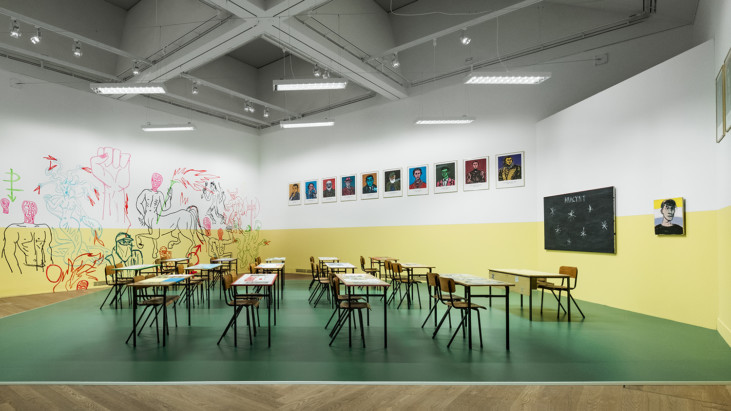
In the exhibition, ”Karol Radziszewski — The Classroom”, floor 4
Language
English
Price
Free of charge, pre-registration required
Contact: Alexander Kateb, Curator of Programming Moderna Museet
A Brief Queer History of Ukraine
The talk “A Brief Queer History of Ukraine” explores the histories of queer communities and artistic practices in Ukraine across different historical periods, drawing on Shebetko’s recently curated group exhibition “A Heart That Beats: Focus on Queer Ukrainian Art” at Schwules Museum in Berlin.
Through selected artworks, archival materials, and lived histories, the talk traces how queer expression has persisted despite censorship, erasure, and political repression. It reflects on the challenges of researching and exhibiting queer art from Ukraine, particularly in relation to gaps in archives and dominant historical narratives.
Do you think it could become a crime?
“Do you think it could become a crime?” This is a question often asked abroad in light of Hungary’s increasingly pronounced anti-LGBTQ+ rhetoric in recent years.
In response to the government’s ongoing efforts to render queer people invisible, perhaps most visibly marked by last year’s attempt to ban Budapest Pride, Gyula Muskovics and Karol Radziszewski recently presented DIK Fagazine #15: Budapest Issue—an unprecedented publication “filled with dicks and sweaty bodies of all kinds, alongside solid archival research on girls, boys, and trans folks fucking around and subverting the system from the 19th century to the present.”
On the occasion of the third and final history lesson in “The Classrom”, Muskovics reflects on the complex situation of queer culture in Budapest. Placing contemporary underground art circles in dialogue with the semi-public countercultural practices of the ‘70s and the ‘80s, his talk frames subversion as a form of queer world-making.
Anton Shebetko
Anton Shebetko (he/him) is a Ukrainian artist, photographer, curator, and writer from Kyiv, based in Amsterdam. His practice explores LGBTQIA+ experiences in Ukraine, focusing on themes of memory, loss of identity, multiplicity of history, and the political role of photography and archives.
His research into forgotten queer histories informed his book “A Very Brief and Subjective Queer History of Ukraine”. Shebetko has exhibited internationally, including at FOAM (Amsterdam), Schwules Museum (Berlin), Q21 (Vienna), and Photo Elysée (Lausanne). He participated in the Kyiv Biennial (2023) and was nominated for the PinchukArtPrize (2025).
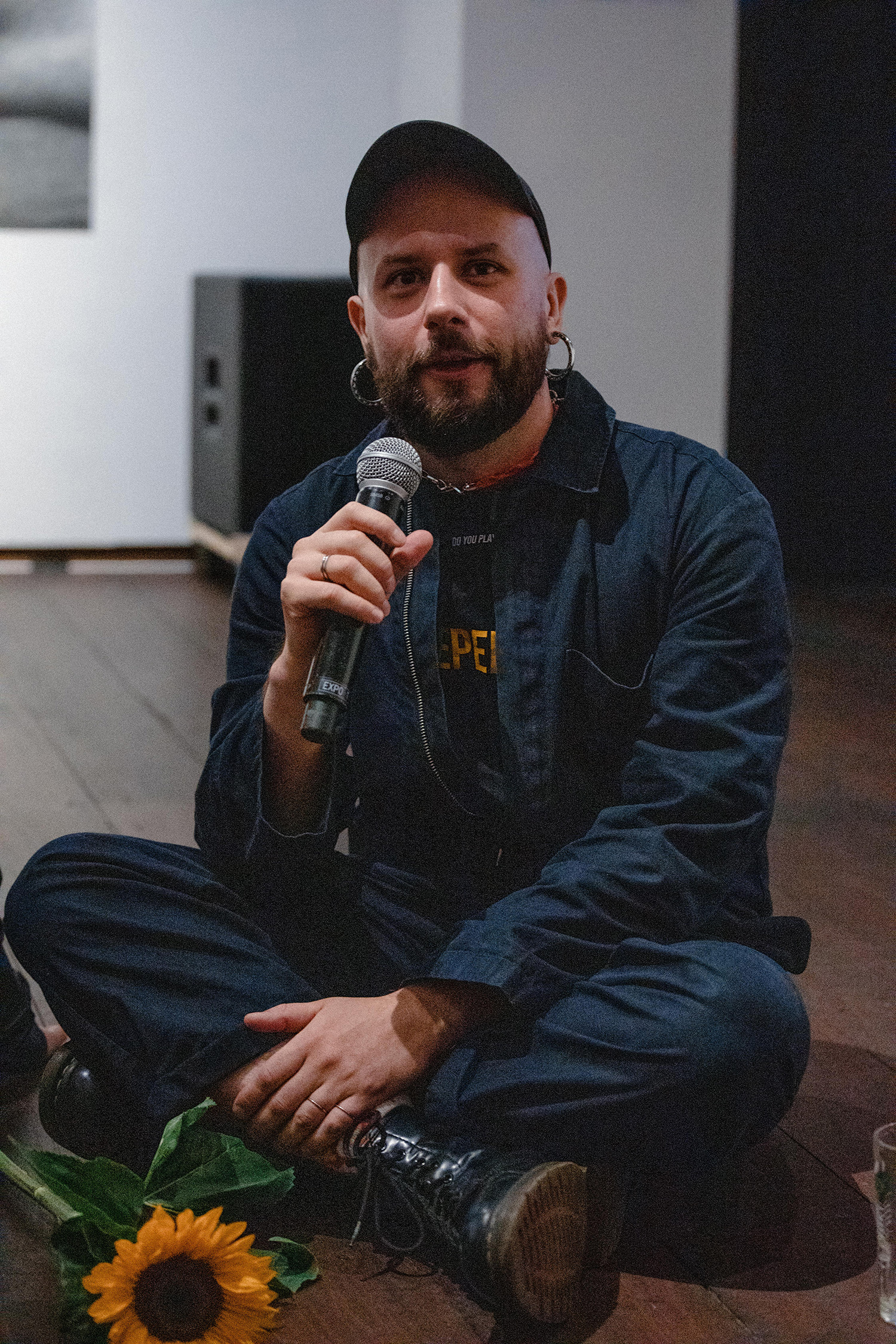
Gyula Muskovics
Gyula Muskovics is a Budapest/New York based curator, writer, artist, and researcher, as well as a founding member of the Hollow immersive performance art group. From 2023 to 2025, he was a Fulbright fellow at The Museum of Modern Art and New York University. In 2025, he earned a PhD in Art Theory at the Moholy-Nagy University of Art and Design in Budapest with a dissertation on the avant-garde fashion circles of the former Eastern Bloc.
Last year, he also co-edited DIK Fagazine #15: Budapest Issue with Polish artist Karol Radziszewski, exploring Hungary’s queer past from the nineteenth century to the present. He has given talks and created/curated events internationally. His writings on art have been published by the European Journal of Women’s Studies, CTM Magazine, Momus Journal, Artmargins, The Kitchen On Mind, The Sculpture Center, and post-MoMA, among others.
History Lessons in The Classroom
Throughout the exhibition period of “Karol Radziszewski — The Classroom“, the space will be activated with history lessons — lectures, conversations, film screenings and more. With the ontology of the queer archive as a shared foundation, these lessons explore various geographical locations and multiple layers of time.
Friday 20 February 2026: Queer sound archives and Chaser Art
Performative gathering with The Archive of Pink Noises (Birt Berglund, Anna Giertz, and Johan Sundell) and lecture performance by poet Andria Nyberg Forshage.
Friday 6 March 2026: Lesbians & punk in former Yugoslavia
Film screening of “Relations: 25 Years of the Lesbian Group ŠKUC-LL” (2012), followed by artist and organiser Marianna Feher from the platform Tentative Transmits in conversation with the film’s director Marina Gržinić and writer Suzana Tratnik.
The event is a collaboration with the platform Tentative Transmits.
Friday 20 March 2026: Queer visibility in Ukraine and Hungary
Lectures by artists Anton Shebetko and Gyula Muskovics, followed by a discussion moderated by Karol Radziszewski.
With support of The Adam Mickiewicz Institute.

Karol Radziszewski
Gå in i ”The Classroom” av Karol Radziszewski, en rekonstruktion av ett polskt klassrum från 1990-talet. Här har material från konstnärens …
The Classroom
Become a Member
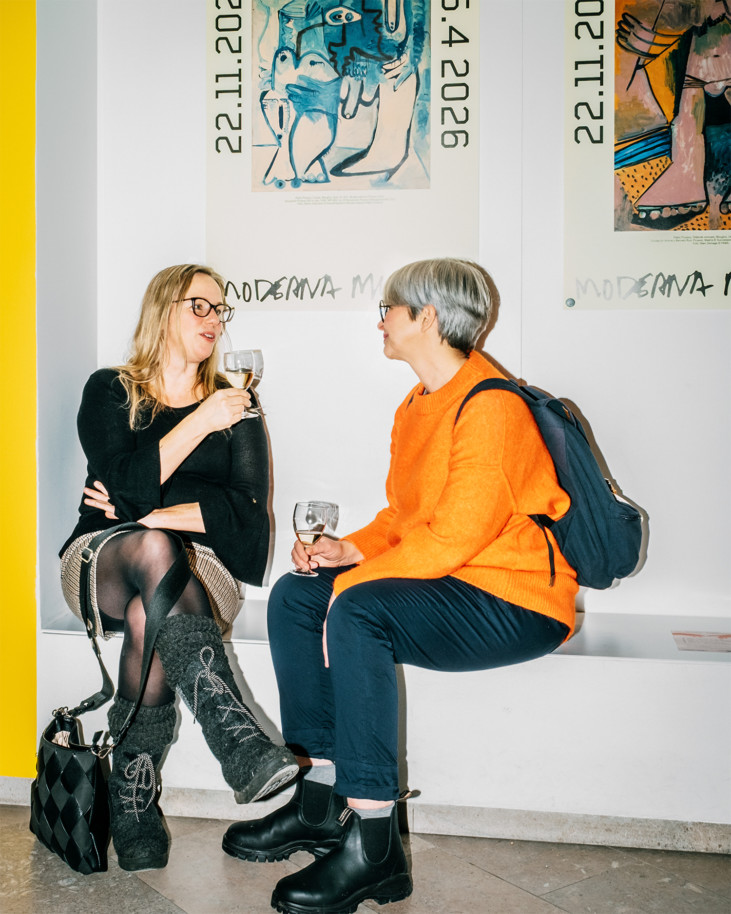
Come as often as you like! Purchase a membership in Klubb Moderna and enjoy free entry to Moderna Museet’s collection and all exhibitions. You can …
Klubb Moderna
History Lesson: Queer sound archives and Chaser Art
Take a seat at the school desk for the first history lesson in “Karol Radziszewski — The Classroom”. Dive into queer sound archives …
History Lesson: Queer sound archives and Chaser Art
History Lesson: Lesbians & punk in former Yugoslavia
The second history lesson in “Karol Radziszewski – The Classroom” takes us to former Yugoslavia as the platform Tentative Transmits, Marina …
Love Under Red Stars