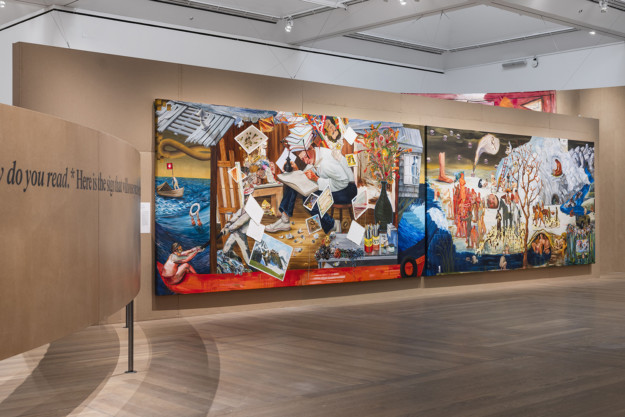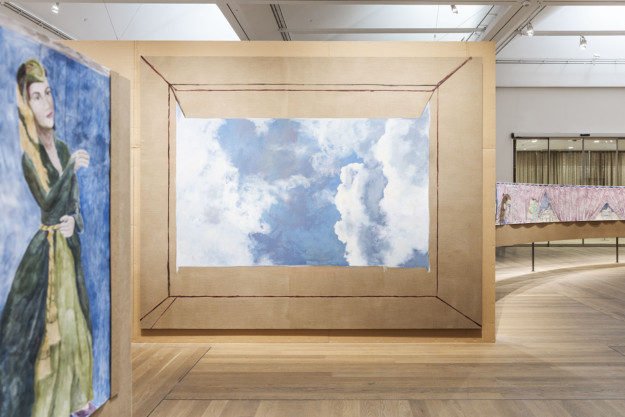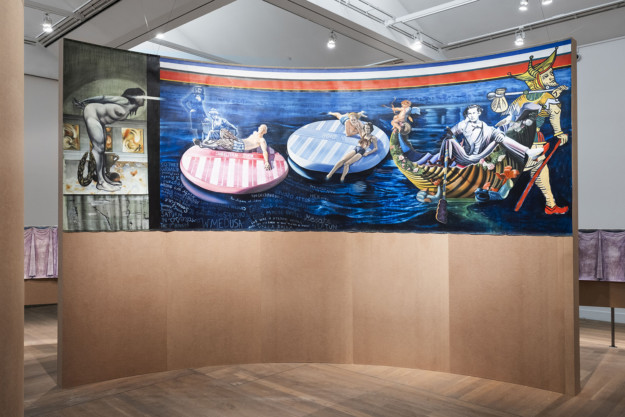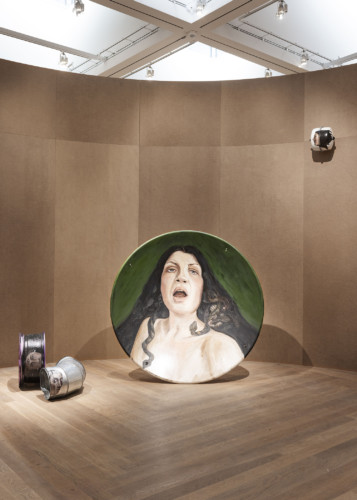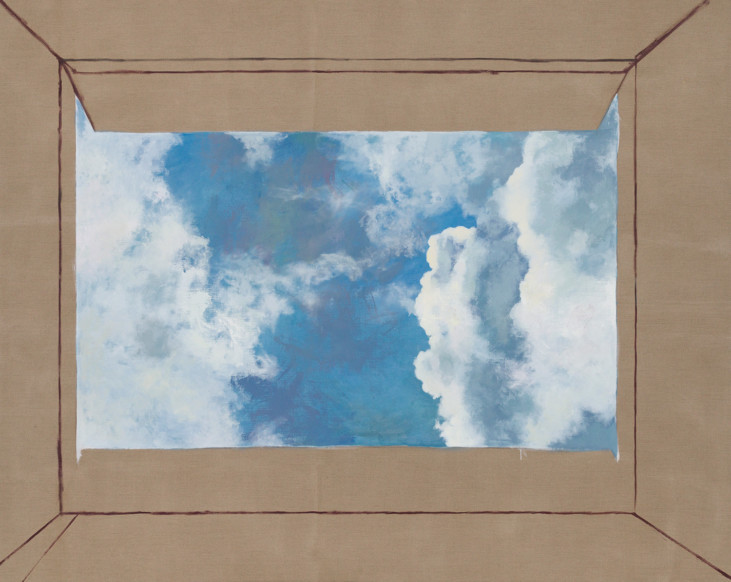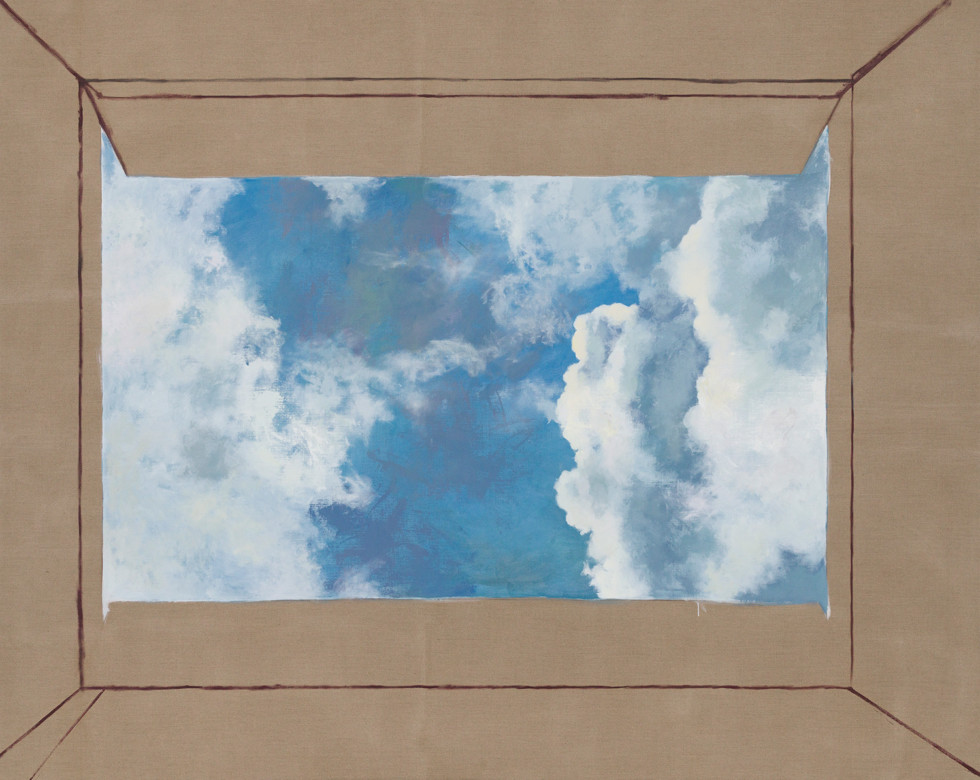
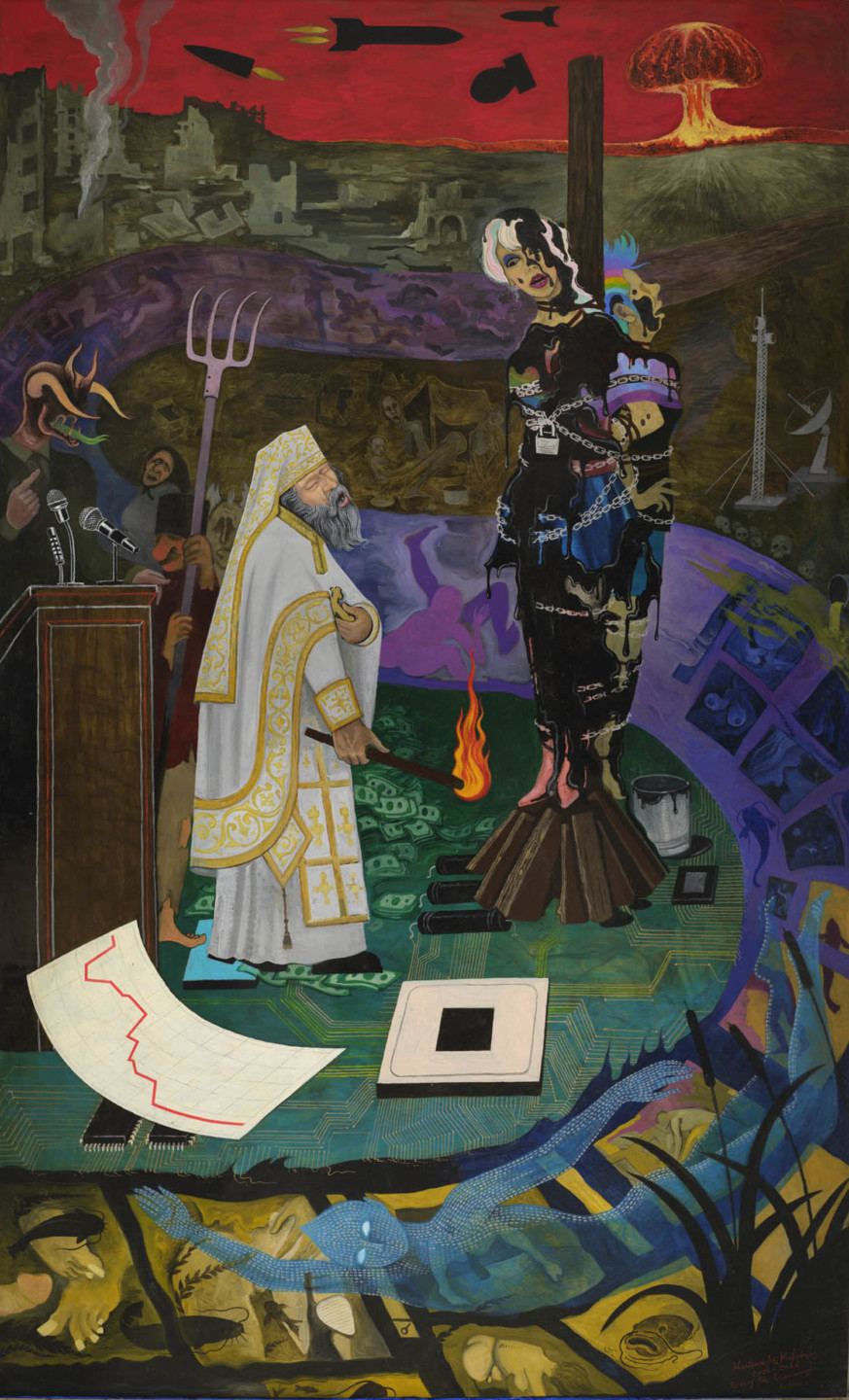
Mohammed Sami, Framed Liberty, 2025 © Mohammed Sami 2026. Courtesy of the artist, Luhring Augustine, New York and Modern Art. Photo: Modern Art.
House of Nisaba
New Stories of Painting
14.5 – 30.8 2026
Stockholm
The House of Nisaba
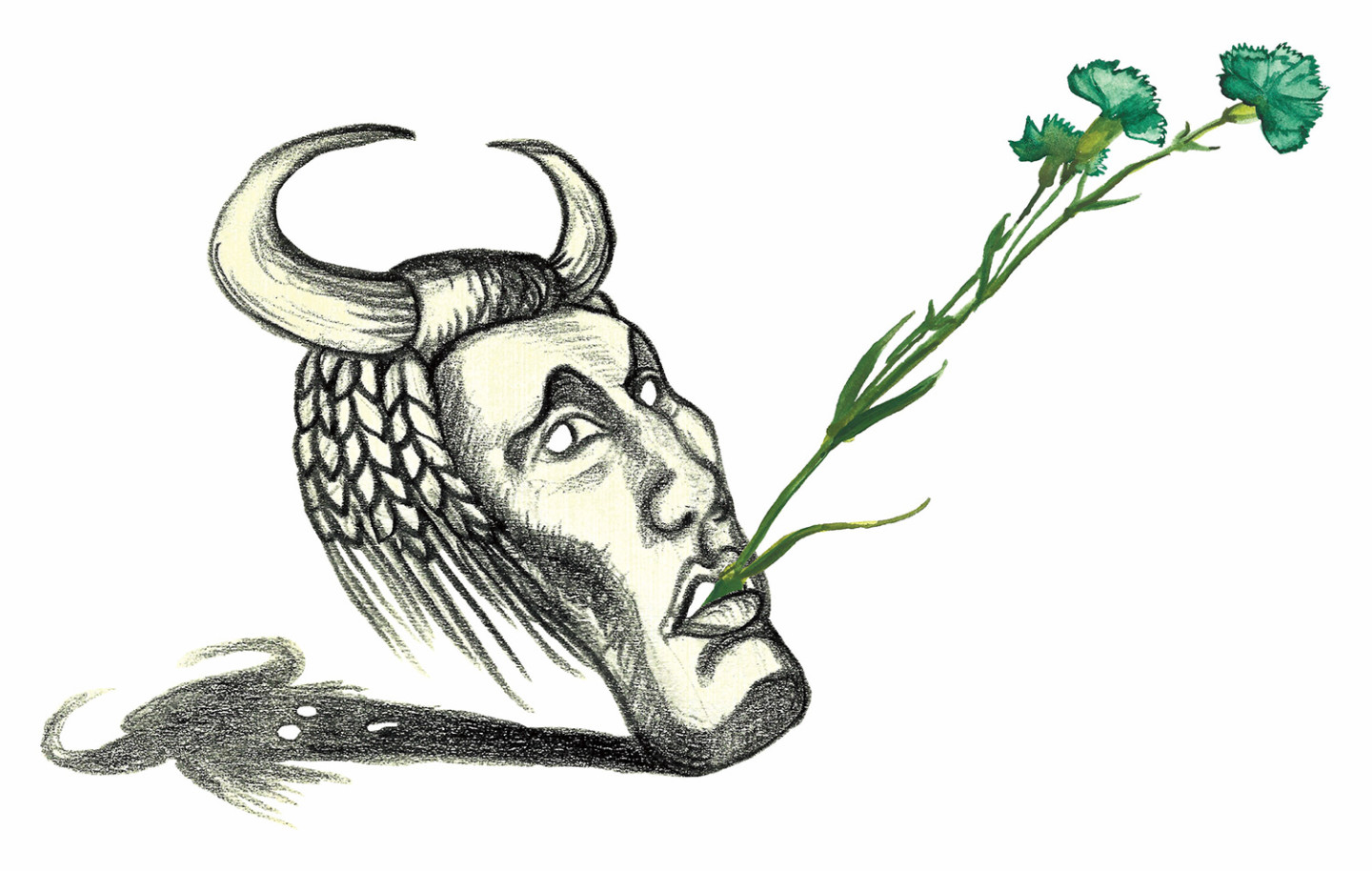
The year is 3100 BCE and writing is invented in ancient Mesopotamia. At first, to count the grain for trading at the market; then to capture human life and imagination in myths, hymns and parables, as language inscribed on clay tablets. The goddess Nisaba presides over this moment when knowledge itself starts to shift, as thousands of years of storytelling begin to take material form. She cannot write herself but speaks through others.
New Languages of Painting
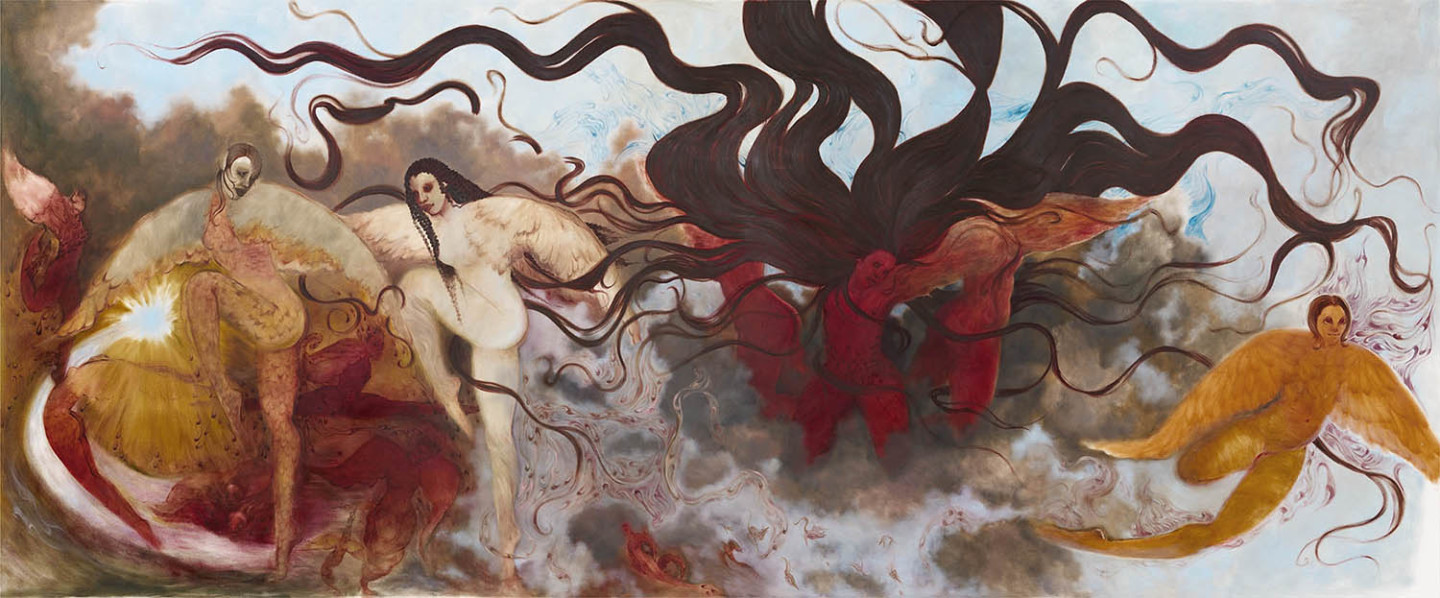
The year is 2026 and knowledge is changing once again. Information circulates at an unprecedented pace and narratives about ourselves, our communities, and the world at large are becoming increasingly unstable. In this moment, we evoke Nisaba as a new generation of painters emerges. The artists in “House of Nisaba” are not part of a movement but share a similar approach: they paint allegorically.
In painting, allegory is a way of creating images or figures that express meaning beyond what they literally show, for instance how a human skull in historical still-life painting symbolises the impermanent nature of human achievement in the face of mortality.
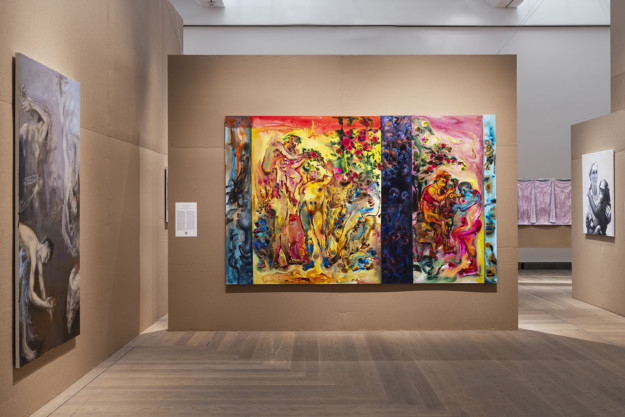
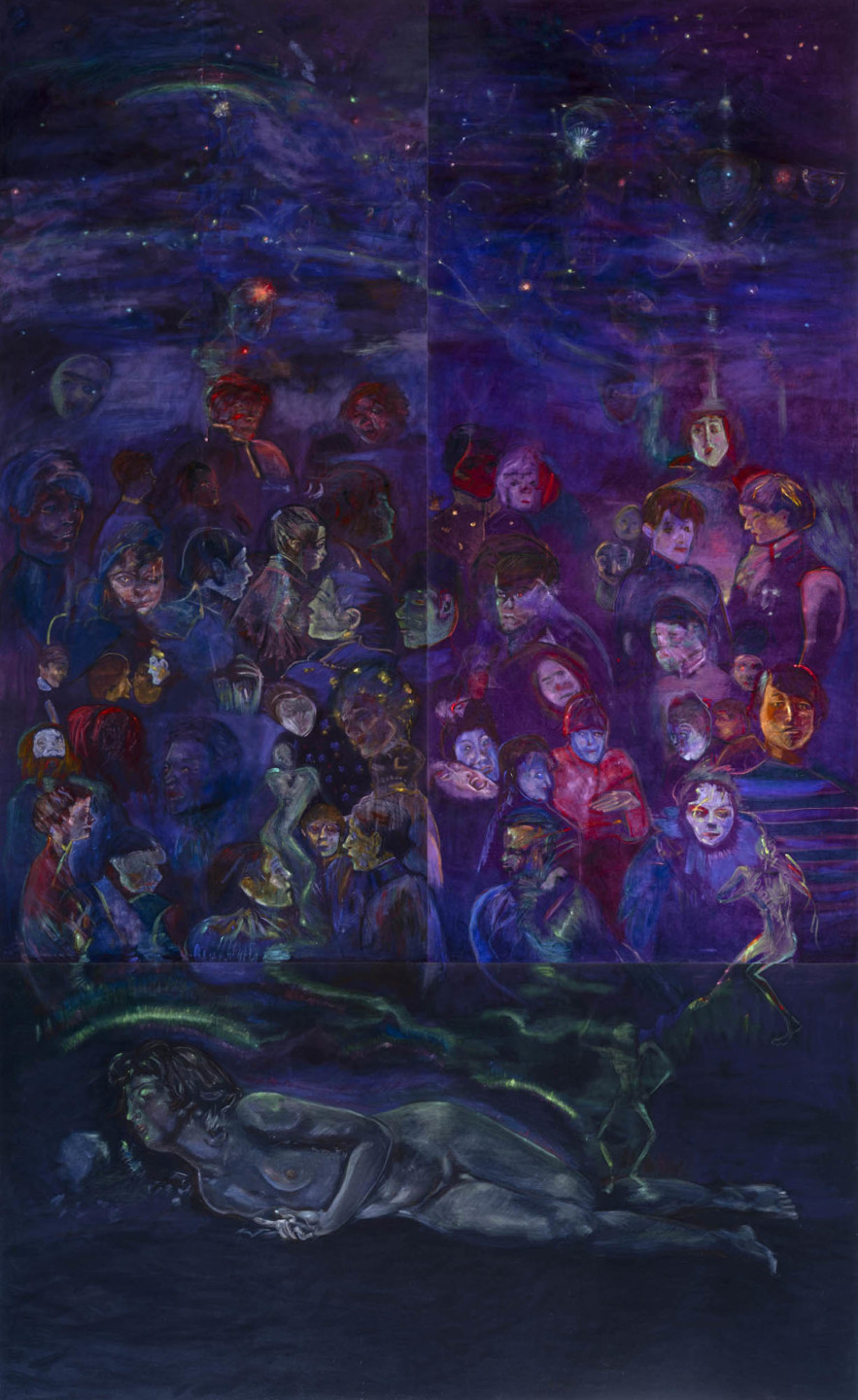
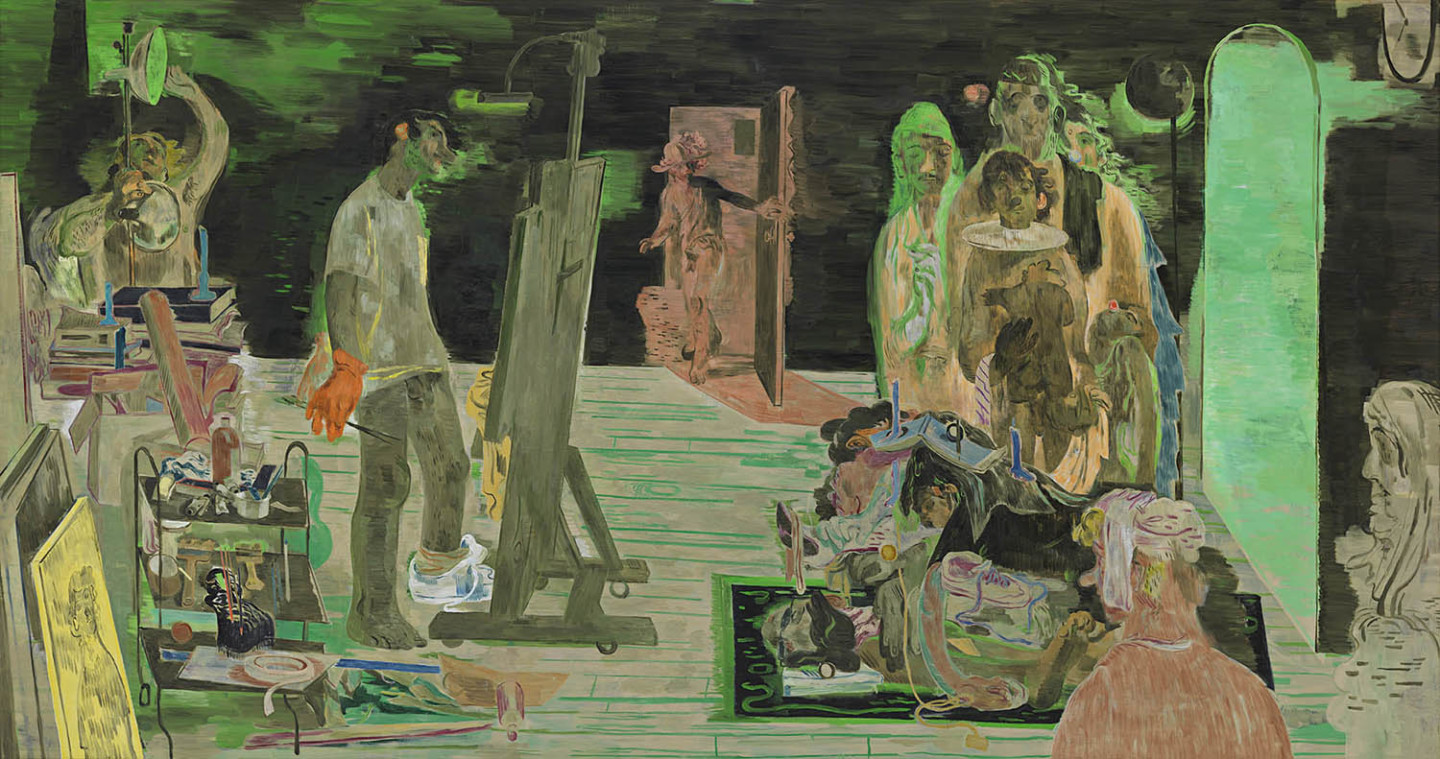
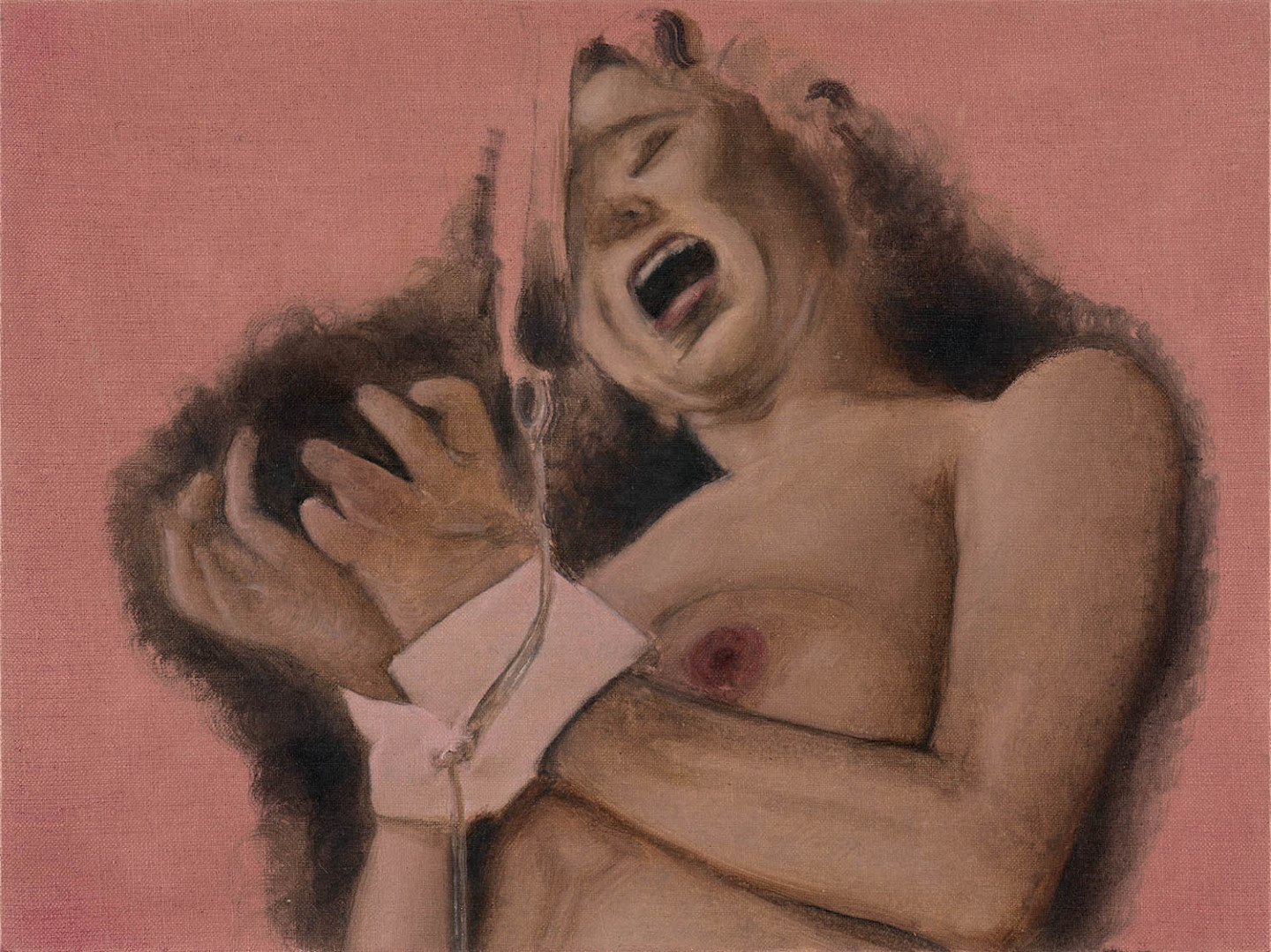
The artists in “House of Nisaba” render new pictorial languages that draw as much from art history, mythology and literature, as from fashion, cinema, news media, science fiction, astrology, and digital platforms like Instagram and TikTok. Information becomes algorithmic, the feed starts to matter. Rather than offering stable narratives, these paintings propose worlds shaped by discontinuity, ambiguity, and multiplicity.
Allegory in Contemporary Painting
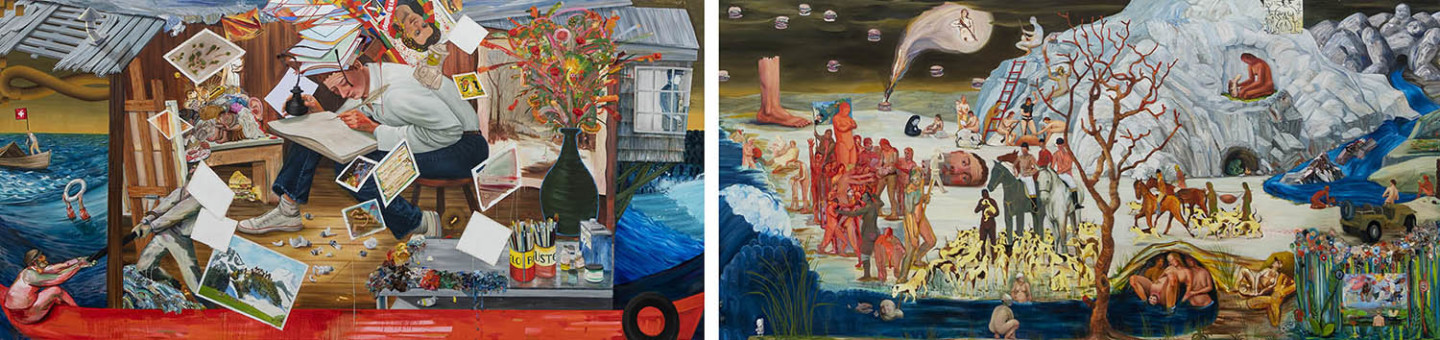
In painting from previous centuries, allegorical meaning was legible to almost all viewers. There was a shared iconography, a shared system of symbols through which visual meaning was produced and recognised.
Today, the production of meaning is largely situated within each artist’s own practice. A shared iconography has made way for a more individualised structure of references: citations and appropriations that reflect the broad circulation and fragmentation of information distribution.
So how is life – experiences, perspectives, stories – narrated by the artists in “House of Nisaba”? How do they tell, speculate, fabulate, roleplay in their work? How do they create their own worlds, cosmologies and storylines?
The Architecture of the House
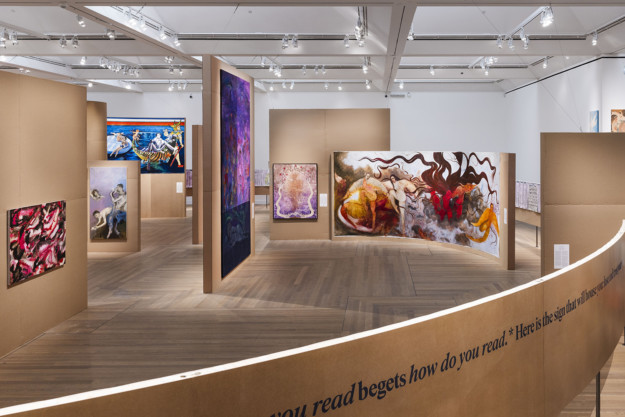
Devised by the design and architecture studio Formafantasma, the exhibition’s architecture suggests this House as provisional and always in the making, reflecting the new life of painting in the 21st century.
The exhibition plays with the architectural history of allegorical painting in temples, churches, cathedrals and mosques, by including aspects of sacred architecture, albeit radically decentralised. This House has a threshold – a large oval ring that functions as an enclosure and frame – that marks it as a distinct object in space, in which fragmentation determines the circulation of visitors.
PARTICIPATING ARTISTS
Soufiane Ababri (Moroccan, b. 1985)
Michael Armitage (Kenyan-British, b. 1984)
Felipe Baeza (Mexican, b. 1987)
Kevin Beasley (American, b. 1985)
Cornel Brudascu (Romanian, b. 1937)
Alex Červený (Brazilian, b. 1963)
Leidy Churchman (American, b. 1979)
Hamishi Farah (Australian, b. 1991)
Martin Gustavsson (Swedish, b. 1965)
Gordon Hookey (Waanyi, b. 1961)
Hortensia Mi Kafchin (Romanian, b. 1986)
Sanya Kantarovsky (Russian, b. 1982)
Melanie Kitti (Swedish, b. 1986)
Matthew Lutz-Kinoy (American, b. 1983)
Jill Mulleady (Uruguayan, b. 1980)
Wangechi Mutu (Kenyan, b. 1972)
Naudline Pierre (American, b. 1989)
Mohammed Sami (Iraqi-Swedish, b. 1984)
Cinga Samson (South African, b. 1986)
Agnes Scherer (German, b. 1985)
Selma Selman (Bosnian-Herzegovinian, b. 1991)
Agata Słowak (Polish, b. 1994)
Mikołaj Sobczak (Polish, b. 1989)
Mounira Al Solh (Lebanese, b. 1978)
Abdellah Taïa (Moroccan, b. 1973)
Salman Toor (Pakistani, b. 1983)
Kevin Quashie (American)
Evelyn T. Wang (Chinese-Dutch, b. 1981)
Curator: Hendrik Folkerts
Audio guide
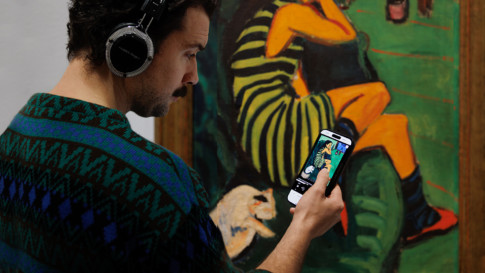
Listen to the artists as they speak about their works in their own words.
The artists in “House of Nisaba” are based in different parts of the world. We therefore invited them to record their own audio tracks. Some were recorded on mobile phones, others in studios.
Listen here: Audio Guide – House of Nisaba
HOUSE OF NISABA: NEW STORIES OF PAINTING
Curator: Hendrik Folkerts
“House of Nisaba: New Stories of Painting” is co-organised with Kunsthaus Zürich.
The exhibtion is supported by:
The House of Nisaba Exhibition Circle
Pontus Bonnier
Mari and Thomas Eldered
Lars Förberg
DeBlasio Family Foundation
Phileas – The Austrian Office for Contemporary Art
Federal Ministry of Housing, Arts, Culture, Media and Sports
Become a Member
Come as often as you like! Purchase a membership in Klubb Moderna and enjoy free entry to Moderna Museet’s collection and all exhibitions. You can …
Klubb Moderna
Newsletter
Subscribe to our newsletter! Get the latest news about Moderna Museet directly to you by e-mail. …
Newsletter
Buy ticket
Regular: 170 SEK (online 160 SEK)
Reduced: 140 SEK (online 130 SEK)
Free admission for those 18 and under and Klubb Moderna
Exhibition Catalogue
A comprehensive catalogue is published for the exhibition “House of Nisaba: New Stories of Painting” with a presentation on each of the artists, images of all the artworks as well as new texts by art historian Claire Bishop, Hendrik Folkerts, artist Irena Haiduk, art historian Ricardo Montez and writer Abdellah Taïa.
Design by Asso Stockholm. The exhibition catalogue is published by Moderna Museet.
Moderna Museet Shop: House of Nisaba: New Stories of Painting