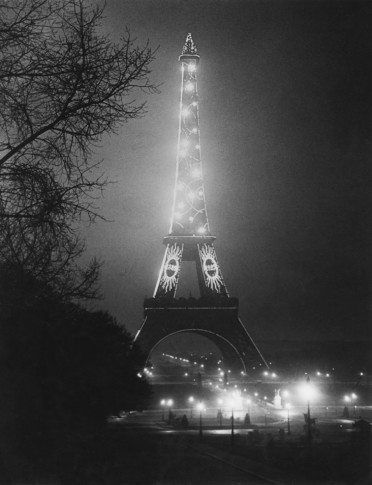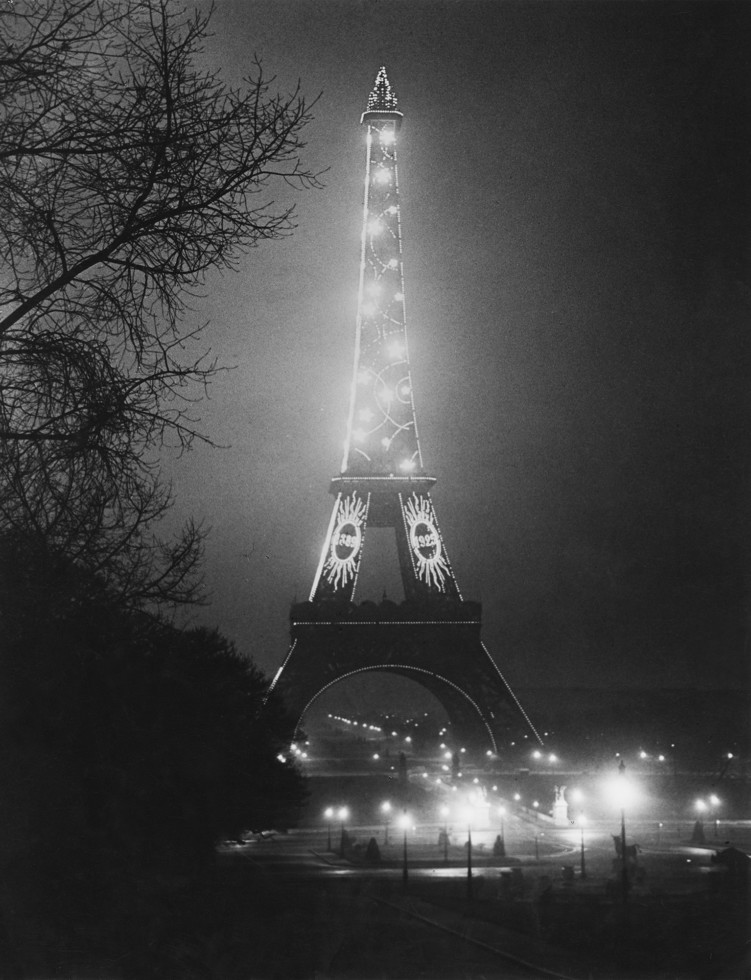
Brassaï, La Tour Eiffel éclairée/The Eiffel Tower Illuminated, 1931 © Estate Brassaï Succession – Philippe Ribeyrolles 2026
Text by Curator
Brassaï – The Secret Signs of Paris
Text: Anna Tellgren
In different contexts, Brassaï has elaborated on why he started photographing, on his longing to preserve everything he experienced and was fascinated by as a flâneur through Paris. Photography became the form of expression that best corresponded to what he wanted to achieve. A shimmer lies over the memories from the first years in the French capital, from the bars in the neighbourhoods around Montparnasse and Montmartre where he hung out with his friends until the early hours of the morning. Through the images, we gain access to the famous monuments, bridges, the small squares, markets, and fairgrounds – magically illuminated by the glow of gas lanterns. But we see them captured from another perspective, from other angles, presenting an alternative Paris, beyond the tourist hotspots. The exhibition focuses on the intense period in the 1930s when Brassaï became an innovator of nocturnal photography and one of the foremost portraitists of the city and life in Paris. The title of the exhibition, “The Secret Signs of Paris”, alludes to how the photographer opened the door to a hidden world using his camera, his curiosity, and his artistic practice [1]. His photographs challenge us to interpret signs – the traces of events and human presence – and to look for the answer to the many mysteries of the city. Here, the comprehensive series of photographs of graffiti becomes an important element in understanding what Brassaï saw and how he moved through the city. The exhibition allows us to follow in his footsteps.
Gyula Halász was born in 1899 in Brassó, Transylvania, which was part of Hungary at the time [2]. That was also where he grew up, with the exception of when his father, a professor of French, stayed in Paris with his family from 1903 to 1904 [3]. In the lead-up to the First World War, the family fled to Budapest. After serving a year in the Austro-Hungarian cavalry, Gyula Halász started studying at the art academy in Budapest in 1918. He moved to Berlin in 1920, where he continued studying art. In February 1924 he arrived in Paris, where he stayed for the rest of his life, never returning to his home country.
In the early years in Paris, he supported himself by writing articles for Hungarian and German magazines, illustrated with his photographs and those of other photographers. He assumed the pseudonym Brassaï, which means “from Brassó”, and continued to publish and work under this artist name. He moved in artist circles, and contacts in the Hungarian diaspora led to different kinds of commissions. Photographer André Kertész and Charles Rado were among his compatriots. The latter started the photo agency Rapho, which represented Brassaï both in Paris and New York. Around 1930 he began photographing more seriously, using a folding camera of the brand Voigtländer Bergheil with glass negatives (6.5 x 9 cm), switching to a Rolleiflex in the mid-1930s with medium-format (6 x 6 cm) negatives. His career as aphotographer took off fast and photography became his main source of income. He took all kinds of jobs, even photographing hairstyles for the famous hairdresser Monsieur Antoine and hiring two assistants to keep up [4]. In the early years, Brassaï moved around between small hotels in Montparnasse, where he even installed a darkroom to develop his own photographs, which he continued doing throughout his career.
Brassaï’s photographic production encompasses three main themes, of which the city of Paris is the most famous; but his portraits of artists and their work, as well as his interest in graffiti are also well-known. One of the many writers and artists that Brassaï met and socialised with over the years was Henry Miller, who lived in Paris from 1930 to 1939, becoming a friend and champion of Brassaï’s photography in several contexts [5]. Another major influence was Pablo Picasso. They were introduced to each other in 1932 by the publisher Tériade, ahead of a commission for the Surrealist magazine Minotaure, leading to a lifelong friendship. Brassaï continued to photograph Picasso’s sculptures and published the book “Conversations avec Picasso” (Conversations with Picasso) in 1964, which presents personal and everyday images of one of modern art’s most celebrated artists [6]. Other artists that he portrayed in text and image include Pierre Bonnard, Georges Braque, Salvador Dalí, Henri Matisse, Germaine Richier, and Jacques Villon – later collecting the portraits in a book about the artists in his life [7].
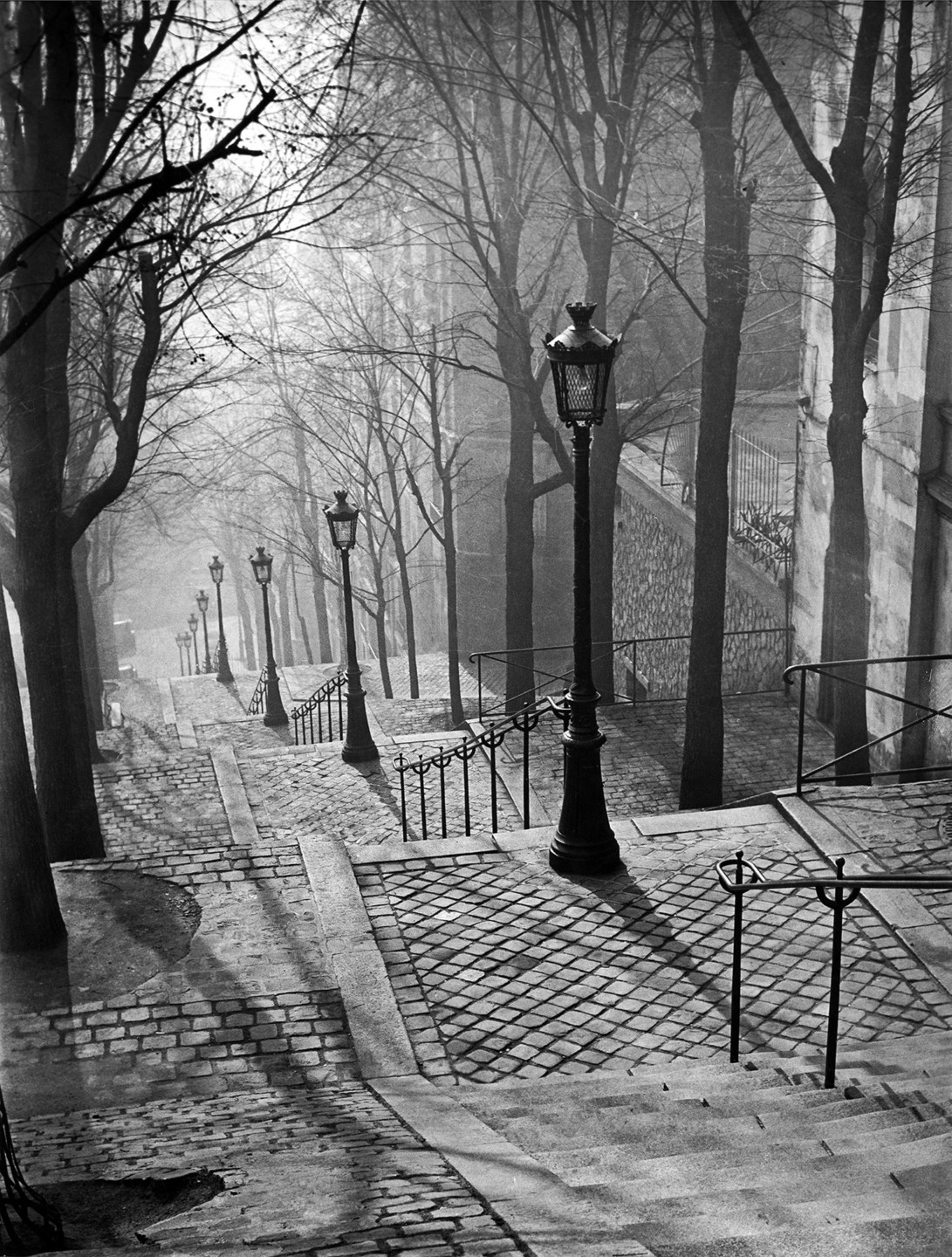
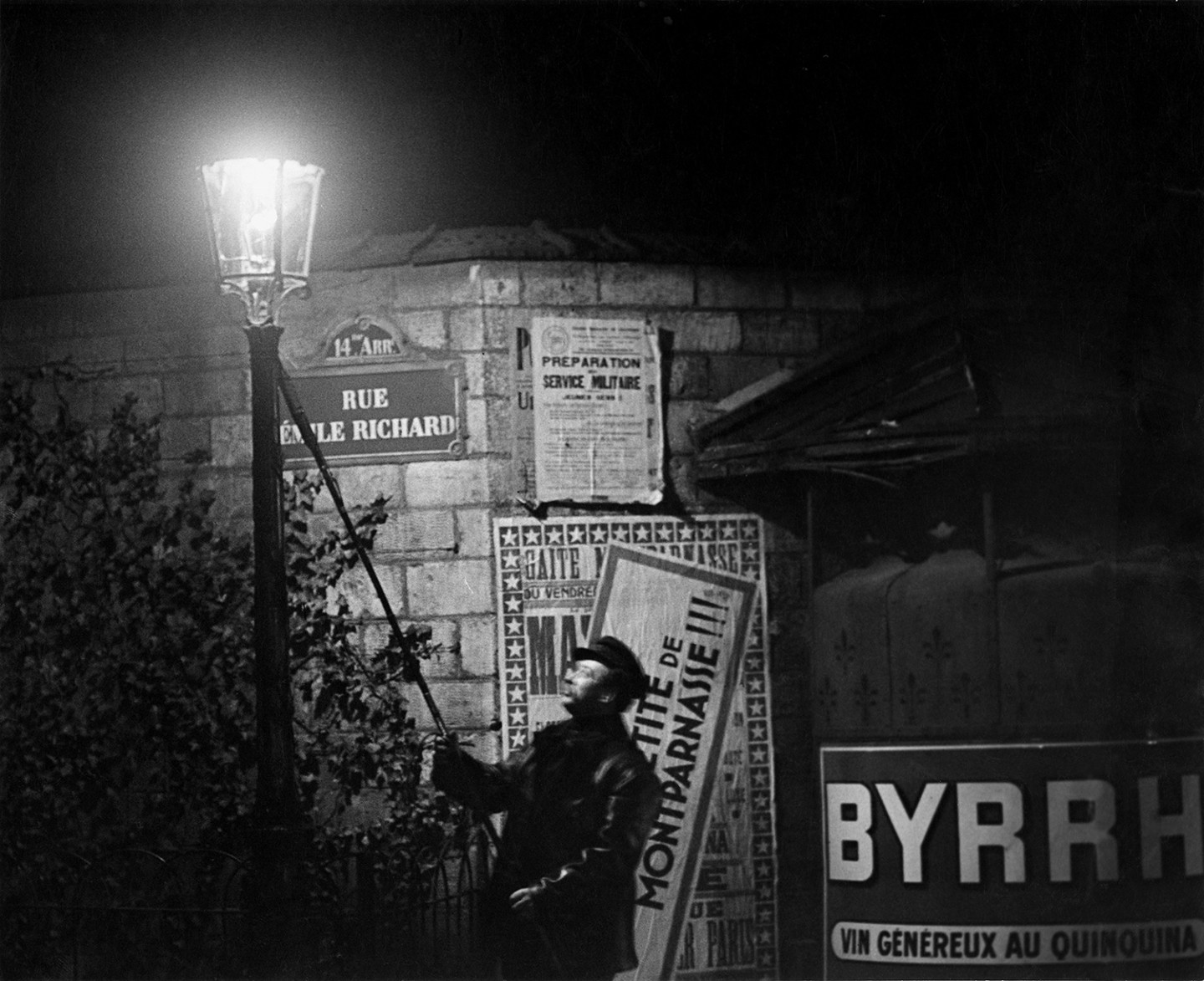
Brassaï’s major breakthrough as photographer came with the book “Paris de nuit” (Paris by night) which was published by Arts et Métiers graphiques in 1933, with a text by the writer and diplomat Paul Morand. The book contains sixty-four carefully selected photographs published in a spiral-bound soft-cover book (25 x 19.3 cm). The photographs are printed as full-page bleeds on matt, black, relatively thick paper. The title on the cover is written with red dots to resemble the city’s many neon lights. The book includes many of the famous motifs – the dark cobblestone streets, the narrow alleyways, the prostitutes, Notre-Dame, the metro, the Eiffel Tower, and the cats – all rendered in dark tones, only illuminated by the light emanating from the many characteristic buildings around Paris. The production of the book is a complex story, with Brassaï collaborating closely with the designer and publisher Charles Peignot and the journalist Jean Bernier, who wrote all the captions [8]. The book was part of a tradition from the late nineteenth century, in which established writers, and later filmmakers, were fascinated by the underworld of Paris, describing it from the perspective of a flâneur. Other popular publications at the time were the many magazines reporting on crime and publishing detective stories illustrated with images by Brassaï and other photographers who specialised in these nocturnal adventures.
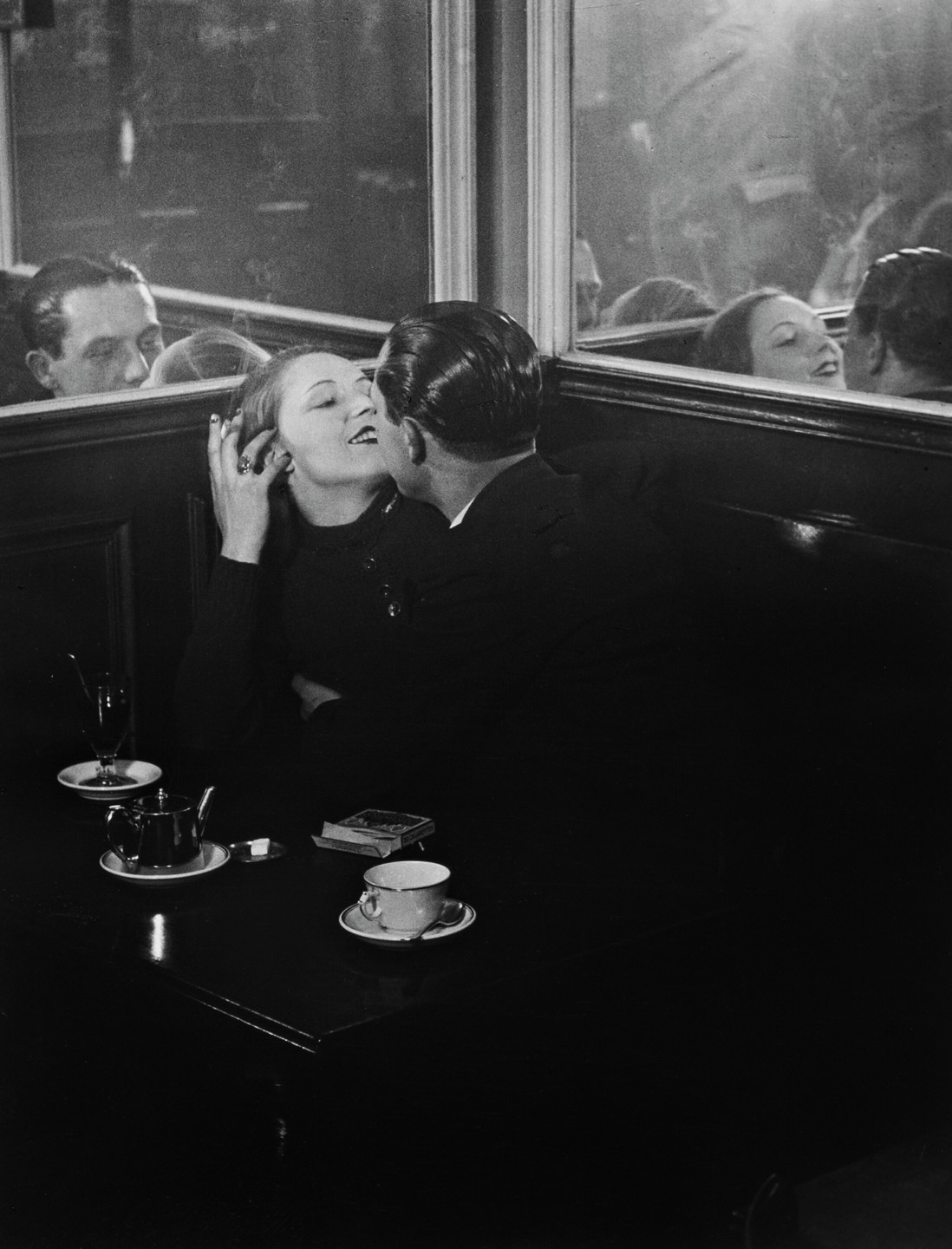
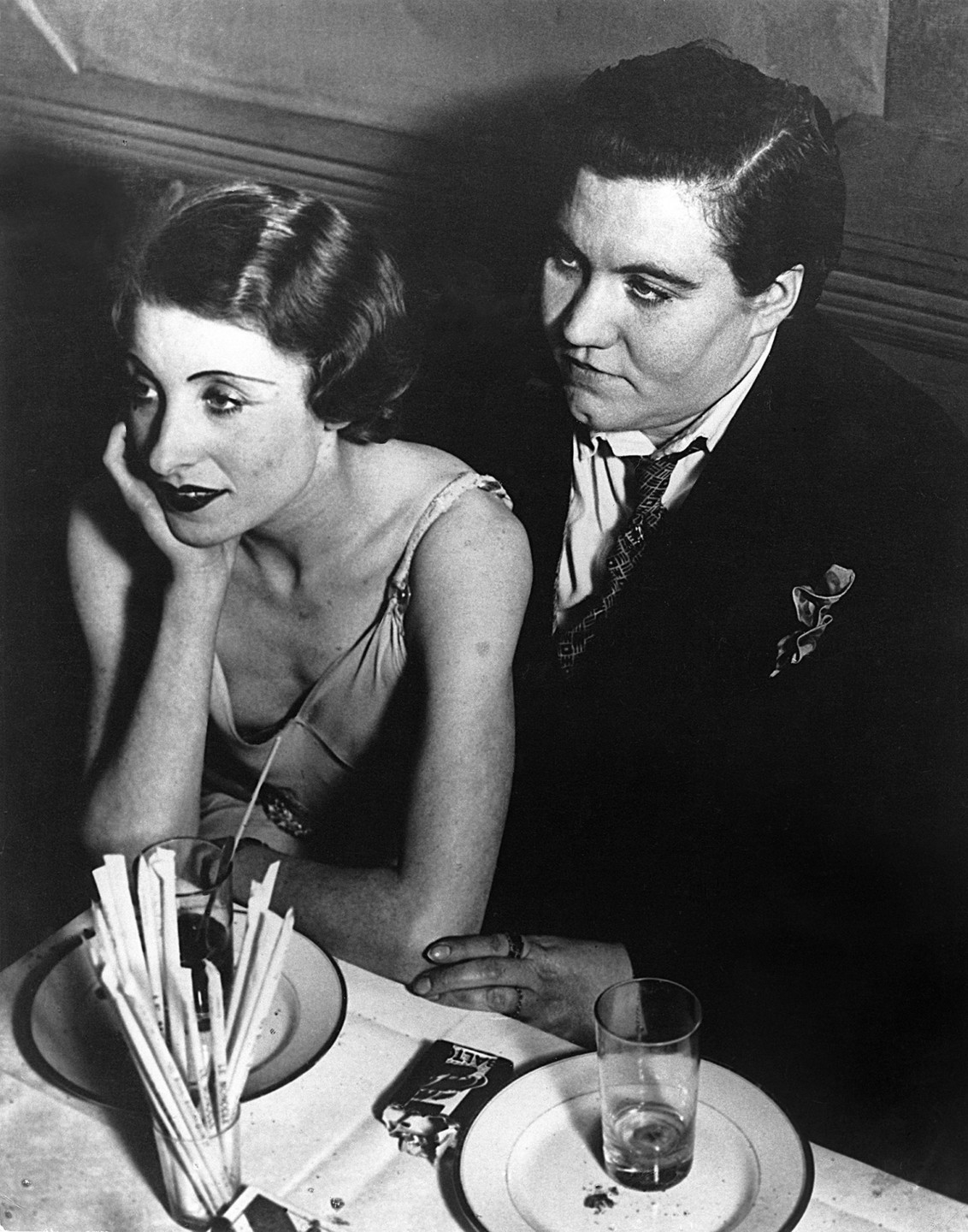
After the success of “Paris de nuit”, Brassaï started a new collaboration around his more intimate photographs of Paris by night – the bars, dance establishments, the homosexual clubs, bordellos [9]. Despite the interest it generated, he decided to pursue other projects instead. After the war, the atmosphere had shifted and stricter censorship than in the 1930s was put into place, making it simply too difficult to publish these types of images openly. It wasn’t until the mid-1970s that Brassaï got in touch with the publisher Claude Gallimard, suggesting a number of book projects based on the vast material from Paris. This led to the book “Le Paris secret des années 30” (1976) for which Brassaï himself developed the design idea and was closely involved in the entire process [10]. With the distance of forty years, he told the story behind the images and whom we encounter. We learn of Grand Albert and his gang, La Môme Bijou, Kiki de Montparnasse, of the atmosphere at Le Monocle and Chez Suzy. But, as it turns out, we weren’t told everything – it was later revealed that Brassaï’s assistant Gabriel Kiss played the role of customer in the series from Chez Suzy, but the prostitutes were really working there. Brassaï staged a sequence of events at the brothel, which was probably necessary to fulfil the discretion guaranteed to customers and to obtain permission to enter as a photographer. The photographs included in the book were all taken between 1929 and 1934, and it’s as if Brassaï here achieved his photographic zenith and is one with the events, people, and surroundings he lived in and documented. The book has become one of the most important sources with regards to his practice as a photographer and is a classic within the history of photobooks.
At the time of Brassaï’s breakthrough as a photographer, the medium was in an intense phase of development, which was influenced by the breakthrough of the small-format camera and the major entry that photography made into the illustrated press [11]. News from all corners of the world was reported in the form of large photo reportages. There was a high demand for photographs and a market emerged in which different types of photo agencies and photo editors handled the assignments and managed the contacts. Examples of these popular magazines include the French Vu, and the English Picture Post, American Life and Look and in Sweden, from 1938 onwards, the illustrated magazine Se. While press photography was professionalised, many of the avant-garde movements, like Futurism, Bauhaus, Russian Constructivism, Dada, and Surrealism, were also interested in photography. Paris was a hub and had been the epicentre of new ideas since the discovery and establishment of photography from the mid-nineteenth century onwards. This is where many of the most famous photographers came to live and work, including Brassaï and his colleagues Henri Cartier-Bresson, Robert Doisneau, André Kertész, Germaine Krull, and Sabine Weiss. They were all representatives of the so-called humanist photography, a movement that arose in the interbellum years in parallel with technological, artistic, and commercial progress [12]. The streets and the life that unfolded on their sidewalks and in the cafés, became symbols in themselves for this special visual poetry, which enticed the photographers, like the writers and artists, to go on long, lonely rambles through the city.
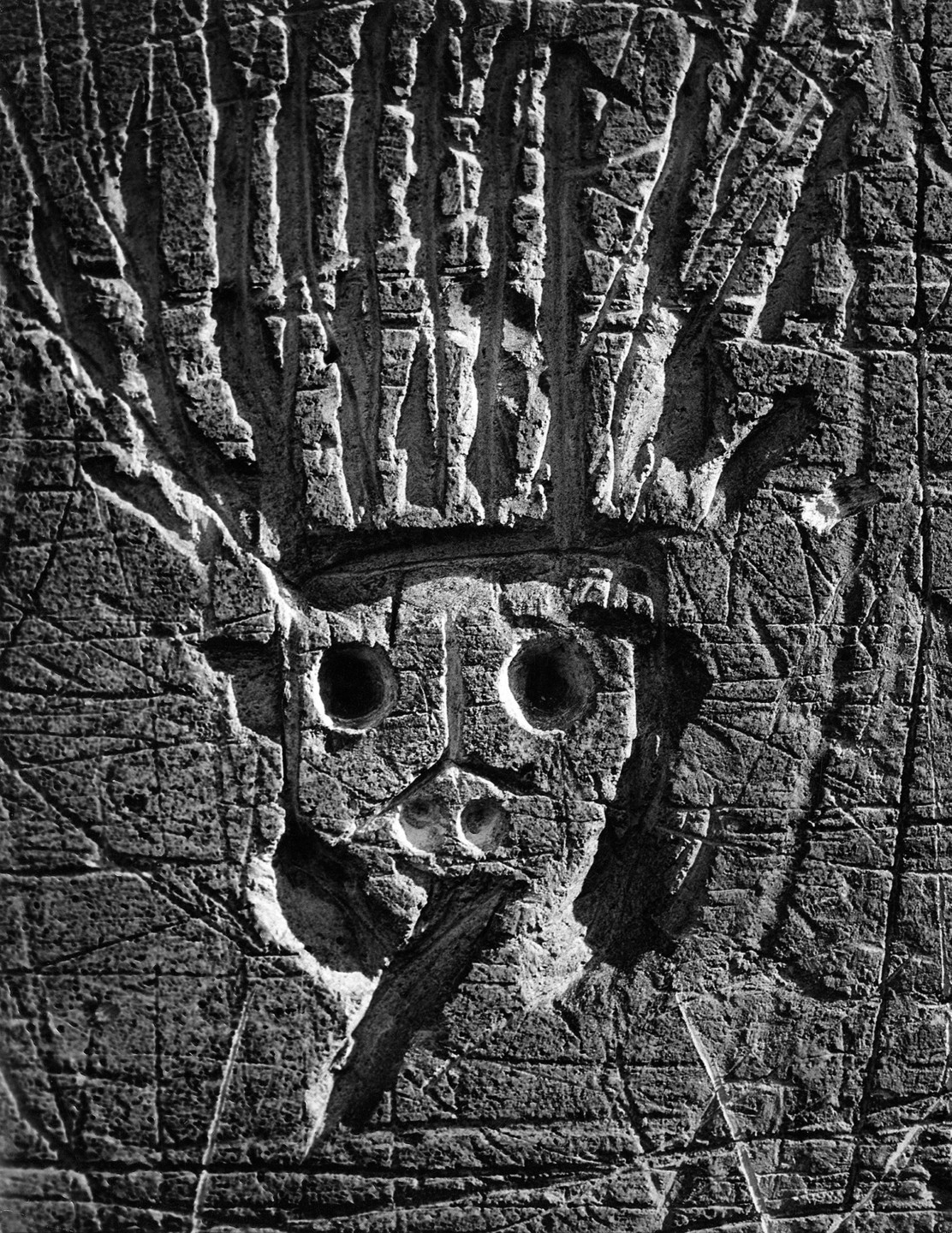
On his recurring walks through Paris, Brassaï discovered street graffiti [13]. Throughout his entire oeuvre from the early 1930s onwards, these signs from walls are present. His work on the graffiti images continued until the late 1950s and was collected in a book by the photographer in 1960, where he sorted them into nine different themes [14]. The collection included the well-known “Le Roi Soleil” (The sun king) and other images of primitive masks, faces, and animals, as well as expressions of magic, love, and death. Brassaï wrote about his extensive series of graffiti photographs in several articles, interpreting these signs on the city walls as a kind of original writing, reading mythological figures into the motifs ‒ demons, heroes, and gods [15]. One could define his collection of graffiti as a kind of archive of human expressivity and creativity. Later he wrote specifically about graffiti in Paris and reflected on his interest in this art form with neither name nor status [16].
In connection with his interest in graffiti, Brassaï collaborated with and moved in Surrealist circles for some years [17]. His first commission was to photograph Picasso’s sculptures for the debut issue of Minotaure in 1933 [18]. Thereafter his article on graffiti was published in the double number 3–4 and in the same number he collaborated with Salvador Dalí on an article about unintended sculptures, as well as one about modern architecture, in which his close-ups of the famous Art Nouveau Paris metro entrances were included [19]. He had many friends in the group and also shared Surrealism’s interest in the rediscovered French photographer Eugène Atget, who had documented the old Paris during the decade following the turn of the twentieth century. Later, Brassaï came to oppose the view of his photographs as “Surrealist” and unreal, claiming that everything he documented was real – which did not, however, hinder him from participating in Minotaure or André Breton’s books [20]. In this period he also created a series of nude studies, whose forms made their way into his sculptures and the series “Transmutations” (1934), a kind of engravings executed on his already exposed photographic glass plates, clearly influenced by his association with the Surrealist movement.
In the war years, Brassaï stayed in Paris, since he didn’t want to leave his photographic archive of negatives in the apartment on rue du Faubourg Saint-Jacques, where he had moved in 1935 and that he kept for the rest of his life. But he refused to have his photographs published during the war or to work for the German occupying forces and spent his time writing and drawing instead. After the war, he started photographing again and his photographs were among other things shown as enormous enlargements as part of the set design in several theatre productions. This was when he met Gilberte Boyer. They married in 1948 and she would accompany her husband on trips and work assignments. One of his most important employers at the time was Carmel Snow, the legendary editor of the fashion magazine Harper’s Bazaar in New York [21]. They had met in 1937 and collaborated for over twenty-five years. Initially he took portraits of artists in their studios for the magazine, but later he also engaged in fashion photography ‒ from balls, exclusive dinner parties, and Parisian high society. In the 1950s he started producing photographic travel reportages for Harper’s Bazaar, travelling to Brazil, Greece, Italy, Morocco, Spain, and Sweden.
When the borders reopened after the Second World War, many young photographers went out into the world and established themselves for shorter or longer periods in the French capital to learn and experience. One of this next generation of photographers was the American photographer Louis Stettner, who made the acquaintance of Brassaï when he settled in Paris [22]. Stettner’s inner circle included the Frenchman Édouard Boubat and the Swedish photographers Rune Hassner and Tore Johnson [23]. They were inspired by and worked in the tradition of the humanist photographers. Rune Hassner was based in Paris from 1949 to 1957; he took on reportage commissions from various magazines, as well as working as a fashion photographer. Through the years he wrote a large number of articles for Swedish photo magazines, in which he introduced European photography and its practitioners to Swedish readers [24]. Brassaï was one of the people he met and interviewed, describing him as one of the most innovative photographers of our time and a well-known personality in French cultural circles [25]. The article is one of several published to highlight Brassaï’s visit to Stockholm and Vålådalen in December 1953.
In the 1950s, Brassaï became the object of several retrospective exhibitions and new book projects. Early on, he had participated in a number of group exhibitions of contemporary photography at galleries in Paris and already in 1937 six photographs by him were included in the exhibition “Photography 1839–1937” at the Museum of Modern Art in New York. Later, in 1956, MoMA presented the celebrated exhibition “Language of the Wall: Parisian Graffiti Photographed by Brassaï”, which was followed by a retrospective in 1968. The exhibition led to him being rediscovered by American photo historians, curators, and gallerists, which resulted in further exhibitions and inclusion in the collections of many of the major art institutions in the US, as well as the many important museums and collections in France. He stopped photographing in the 1970s, stating that he preferred to travel in his own universe of photographs and make them better known [26]. In the last ten years of his life, he received several prizes and distinctions, such as the first Grand Prix National de la Photographie in 1978. Brassaï died in 1984 in Beaulieu-sur-Mer on the French Riviera. His spirit hovers over all of us who love Paris and return again and again to visit our own favourite places – and over new generations of young people who travel there for several months or years to find themselves and the soul of the city.
Notes
1. The title is inspired by the book Paris’ hemliga tecken, Stockholm: Wahlström & Widstrand, 1952, with texts by Göran Schildt and photographs by Tore Johnson. The book is one of many slightly more poetic travelogues from Paris that came about as a collaboration between a writer or poet and a photographer.
2. For a detailed biography see Giberte Brassaï, “Biographie”, in Alain Sayag and Annick Lionel-Marie, Brassaï, Paris: Centre Pompidou and Éditions du Seuil, 2000, pp. 303–305. See also, Stuart Alexander, “Chronology”, Brassaï, ed. Peter Galassi, Madrid: Fundación Mapfre, 2018, pp. 338–343.
3. Brassaï’s father, whose name was also Gyula Halász, was professor of French literature at the local university. His mother’s name was Matilde Verzár, and he had two younger brothers, Kálmán Halász (1900–1978) and Endre “Bandi” Halász (1913–1944). Brassaï wrote to his parents regularly – these letters were published in Hungarian in 1980 and later in translation. They are the main source of information when it comes to his early life and career, see Brassaï, Letters to My Parents, Chicago: The University of Chicago Press, 1997.
4. For an in-depth analysis and interpretation of all the different steps in Brassaï’s career, see Peter Galassi, “Brassaï: Photographer”, Brassaï, ed. Peter Galassi, Madrid: Fundación Mapfre, 2018, pp. 10–71.
5. Henry Miller wrote an essay about Brassaï, “The Eye of Paris”, ca. 1932, which was published in Henry Miller, Max and the White Phagocytes, Paris: Obelisk Press, 1938. The essay was also published in the photobook Brassaï , Paris: Édition Neuf, 1952, edited by Robert Delpire and Pierre Faucheux.
6. The book was illustrated with 53 photographs by the photographer, Brassaï, Conversations avec Picasso, Paris: Gallimard, 1964.
7. Brassaï, Les artistes de ma vie , Paris: Éditions Denoël, 1982.
8. See also Sylvie Aubenas and Quentin Bajac, “From Paris After Dark to the Secret Paris of the 1930s”, Brassaï Paris Nocturne, London: Thames & Hudson, 2013, pp. 11–33. The book was printed in an edition of 12,000 starting at the end of 1932 and into early 1933, which is why both years of publication occur in bibliographies.
9. It resulted in the book Volupté de Paris, Paris: Paris-Publications, 1934, published in a small edition by Victor Vidal, who worked with erotic literature. Brassaï was very critical of how the content was changed without consulting him and he never included it in his own bibliography. When it came to the photographs in Paris de nuit, the publisher never returned the negatives to the photographer and they were first found in 1984 in the archives of the publishing house Flammarion, which had bought up Arts et Métiers graphiques, see Kim Sichel, Brassaï: Paris le jour, Paris la nuit, Paris: Musée Carnavalet, 1988.
10. Brassaï, Le Paris secret des années 30, Paris: Éditions Gallimard, 1976. In English translation by Richard Miller, The Secret Paris of the ’30s, London: Thames & Hudson, 1976.
11. See Stuart Alexander, “Brassaï and the Illustrated Press”, Brassaï, ed. Peter Galassi, Madrid: Fundación Mapfre, 2018, pp. 72–87.
12. On humanist photography see Marie de Thézy, La photographie humaniste 1930–1960, Histoire d’un movement, Paris: Contrejour, 1992.
13. See also Karolina Lewandowska, Graffiti Brassaï. Le langage du mur, Paris: Édition du Centre Pompidou and Édition Xavier Barral, 2016.
14. Brassaï Graffiti. Zwei Gespräche mit Picasso, Stuttgart: Chr. Belser Verlag, 1961. Graffiti de Brassaï, Paris: Les éditions du temps, 1960. See also the later expanded edition in English Brassaï Graffiti, Paris: Flammarion, 2002.
15. Brassaï, “Du mur des cavernes au mur d’usine”, Minotaure, no. 3–4, 1933, pp. 6–7.
16. “Graffiti parisiens”, XXe siècle (Paris), no. 10, 1958, pp. 21–24.
17. See further La Subversion des images: Surréalisme, photographie, film, eds. Quentin Bajac and Clément Chéroux, Paris: Édition du Centre Pompidou, 2009.
18. André Breton, “Picasso dans son element”, Minotaure, no. 1, 1933, pp. 8–29.
19. Salvador Dalí and Brassaï, “Sculptures involontaires”, Minotaure, no. 3–4, 1933, p. 68; Salvador Dalí, “De la beauté terrifiante et comestible, de l’architecture modern’ style”, Minotaure, no. 3–4, 1933, pp. 69–76.
20. Sylvie Aubenas, “Brassaï and Paris by Night”, Brassaï Paris Nocturne, London: Thames & Hudson, 2013, pp. 110–113. Three night photographs by Brassaï are included in André Breton, L’Amour fou, Paris: Gallimard, 1937.
21. Together with the Russian art director Alexey Brodovitch, Carmel Snow made the fashion magazine Harper’s Bazaar into one of the more innovative magazines in the 1940s and ’50s, both in terms of form and content. See also Gabriel Bauret, Alexey Brodovitch, Paris: Éditions Assouline, 1998.
22. Brassaï later wrote a foreword dated 1983, published in the book by Louis Stettner, Early Joys. Photographs from 1947–1972, New York: Janet Iffland, 1987, pp. 7–9.
23. For more information on the young Swedish photographers in Paris, see Anna Tellgren, Tio fotografer. Självsyn och bildsyn. Svensk fotografi under 1950-talet i ett internationellt perspektiv (Ten Photographers. Self-perception and Pictorial Perception. Swedish Photography in the 1950s in an International Perspective), diss., Linköping Studies in Arts and Science no. 151, Stockholm: Informationsförlaget, 1997, pp. 151–229.
24. See for example Rune Hassner, “Fotobohemer, skickliga yrkesmän och ‘konstfotografer’”, Svensk Fotografisk Tidskrift, no. 7, 1949, pp. 139–142. For a compilation see also Rune Hassner, Bilder & Ord. Bibliografi, filmografi, utställningsförteckning med mera, eds. Rune Hassner and Birgitta Forsell, Visuellt. Konst- och bildvetenskapliga institutionens skriftserie no. 7, Gothenburg: Gothenburg University, 2002. In 1988 Rune Hassner (1928–2003) became the first director of the Hasselblad Centre (part of the Hasselblad Foundation in Gothenburg) – a position that he held until his retirement in 1994.
25. Rune Hassner, “Brassaï”, Nordisk Tidskrift för Fotografi, no. 1, 1954, pp. 13–15.
26. From an interview with Brassaï in 1974 in Paul Hill and Thomas Cooper, “Brassaï”, Dialogue with Photography, Manchester: Cornerhouse Publication, 1979/1992, pp. 38–42.