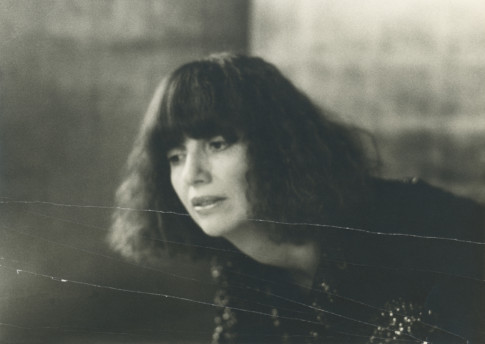
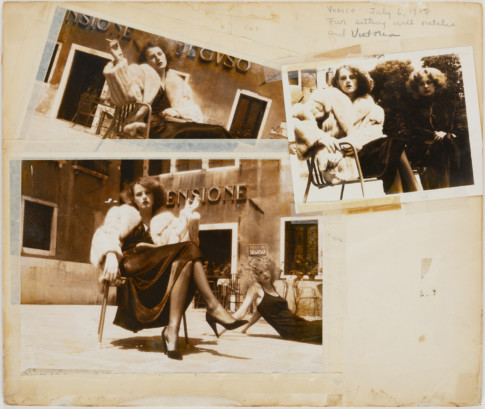
Deborah Turbeville, Venice, July 6, 1978 (Fun sitting with Natalie and Victoria), Venice, Italy, , 1978 Courtesy of MUUS Collection. © Deborah Turbeville/MUUS Collection
Seven themes in the exhibition
Maquillage
After years working at publications as Harper’s Bazaar and Mademoiselle, Deborah Turbeville created the fictional fashion magazine Maquillage. Inside, her models are languid and blurred, with Turbeville’s signature handwriting scrawled across the pages. She printed 1,000 copies and released them at Rizzoli Gallery’s exhibition Fashion as Fantasy in New York, in 1975. There, in addition to Maquillage, spreads of her work were shown alongside designs by the couturiers Karl Lagerfeld, Valentino and Yves Saint Laurent. The opening party for the exhibition brought the glitterati of the 1970s, including Paloma Picasso, Andy Warhol, and Diana Vreeland, the famous editor-in-chief of Harper’s Bazaar. Although she didn’t attend the opening, Jacqueline Onassis later visited the gallery and was introduced to Turbeville’s work, with whom she later collaborated closely. Maquillage was reprinted in 1977 by The Paris Review.
École des Beaux-Arts
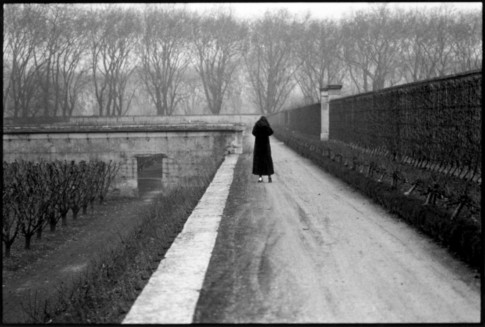
After 20 years in New York, Deborah Turbeville decamped to Paris in the late 1970s in search of new inspiration. A handful of years before that, Paris had brought Turbeville her first assignment as a freelance photographer: a feature for Mademoiselle in which she had interviewed and photographed Parisian women. Newly emigrated, Turbeville discovered the famous École des Beaux-Arts of Paris. This complex of 19th century buildings provided the perfect backdrop for Turbeville, who was enchanted with this period. Scattered around the interior of the school, her models were powdered in chalky white, transforming into living statues. As usual, she then pinned her images together into collage, with some repeated in their negative form. Many of these were printed in her book Wallflower (1978), and later in Le Passé imparfait (Past Imperfect, 2009).
Unseen Versailles
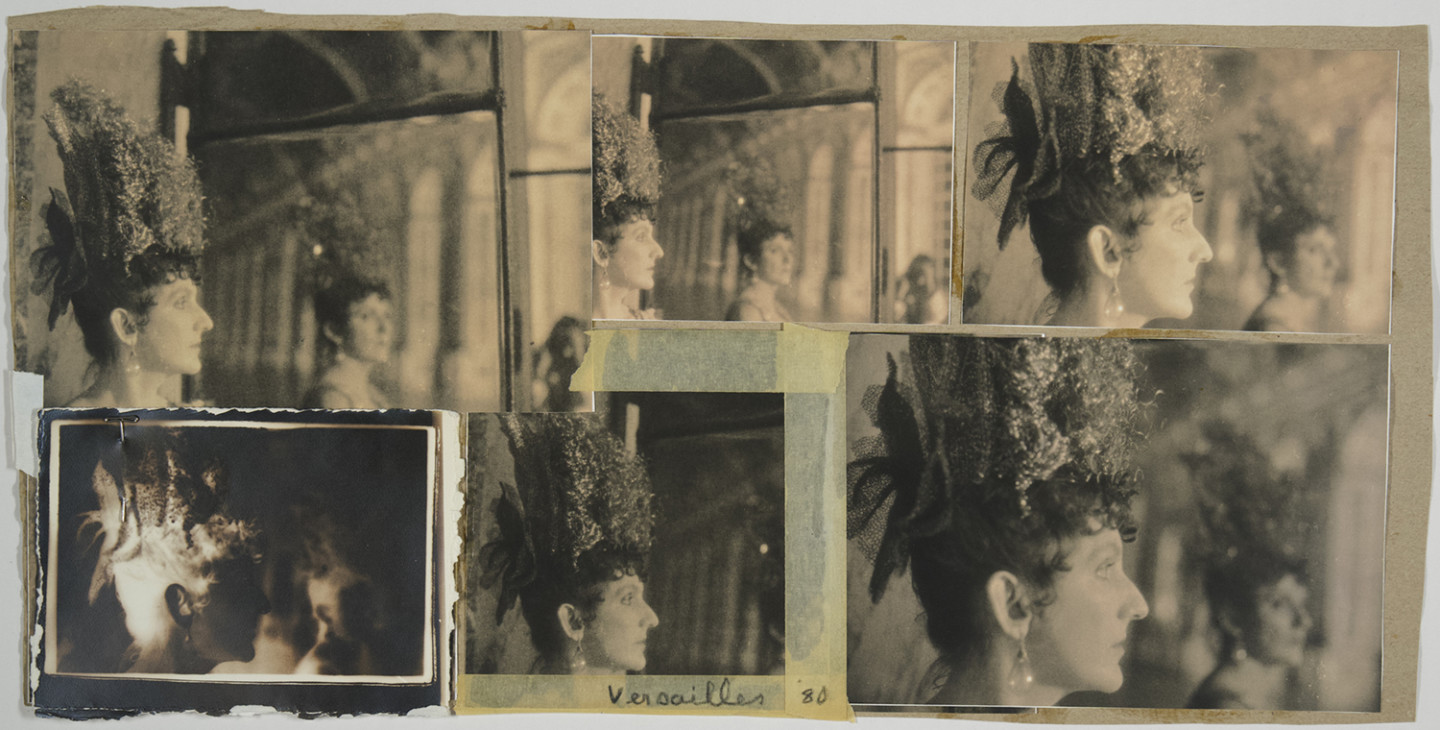
During her tenure as an editor at the American publishing house Doubleday, Jacqueline Onassis commissioned Deborah Turbeville to photograph the Palace of Versailles and its labyrinth of hidden chambers and antechambers. Turbeville spent a winter in there, wandering through the areas kept off limits from tourists and photographing barren rooms, Baroque furniture covered with sheets, broken statues, and curtains thick with dust. Turbeville was blocked from bringing in special props by the curator of the estate, but thanks to Onassis, she was eventually given permission to bring models, whom she outfitted in period costumes. Revealing the decay of grandeur, Unseen Versailles (1981) won the American Book Award in 1982, and enabled Turbeville to find a readership outside fashion magazines.
Newport Remembered
Published in 1994, Newport Remembered is a continuation of the theme established by Deborah Turbeville in Unseen Versailles: monuments of wealth and extravagance fallen into decay. After capturing the vestiges of the French monarchy, she now captured those of the American “monarchy” in Newport, Rhode Island. At the end of the 19th century, this exclusive seaside destination was prized by the aristocracy of the New World. The opulence and splendour of the homes – built by the Vanderbilt family, among others – have suffered the same fate as the French palace, ultimately becoming relics of a bygone time. Enamoured of the past, and with a mind for the theatrical, Turbeville once again brought in models to populate the otherwise empty rooms and stairwells, weaving new stories and breathing new life into the cold, desolate mansions.

Russia
Deborah Turbeville’s fascination with Russia began in the early 1990s. The first time she visited Saint Petersburg, she wrote about feeling overwhelmed: it seemed as though the city had been frozen in time, a product of its history and, perhaps more importantly to her eyes, its literature. Turbeville wrote to Jacqueline Onassis, hoping to do a book on Russia similar to Unseen Versailles, but Onassis’s untimely death in 1994 meant that the two were unable to reunite on the project. In 1997, however, Turbeville released the book Studio St. Petersburg, filled with soft images of the city, speckled photographs of the ballet, and old palaces. Her love of Russia never waned, and she lived in Saint Petersburg for many years.
Mexico
In 1986, Deborah Turbeville purchased “Casa No Name”, a historic house in San Miguel de Allende, Mexico. Enamoured with the house and the town, she published a book dedicated to them both in 2009, Casa No Name. In a departure from her previous publications, much of the book is focused on religious iconography, particularly a Virgin of Guadalupe figure that Turbeville had found in a small antiques shop in Guatemala and later placed at the entrance of her home. Until Casa No Name, Turbeville did not often focus on religion or spirituality in her work. Here, however, her signature is ever-present, through photographs of crumbling frescoes, cracked walls, and empty rooms illuminated only by candlelight.


Passport
In the late 1980s Deborah Turbeville began work on a novella, originally titled”A Strange Tale Concerning Ivana P”., later becoming “Passport: Concerning the Disappearance of Alix P”. This sixty-page story is both autofiction and satire, taken from her experiences working in the fashion industry. Passport tells the story of Alix, a designer at the peak of career who has just presented her latest collection to the Parisian glitterati (including her friend The Empress – a clear reference to Turbeville’s mentor and friend Diana Vreeland). But the pressure of the industry is bearing down on Alix. Desperate for an escape, she confides in The Empress, who whisks her away to a hidden sanitorium. From there, Alix chronicles her mental state in a diary. Although the novella was never formally published, it inspired Turbeville to create a series of 130 collages.